Service
Generator Installation with a Safe Transfer Switch
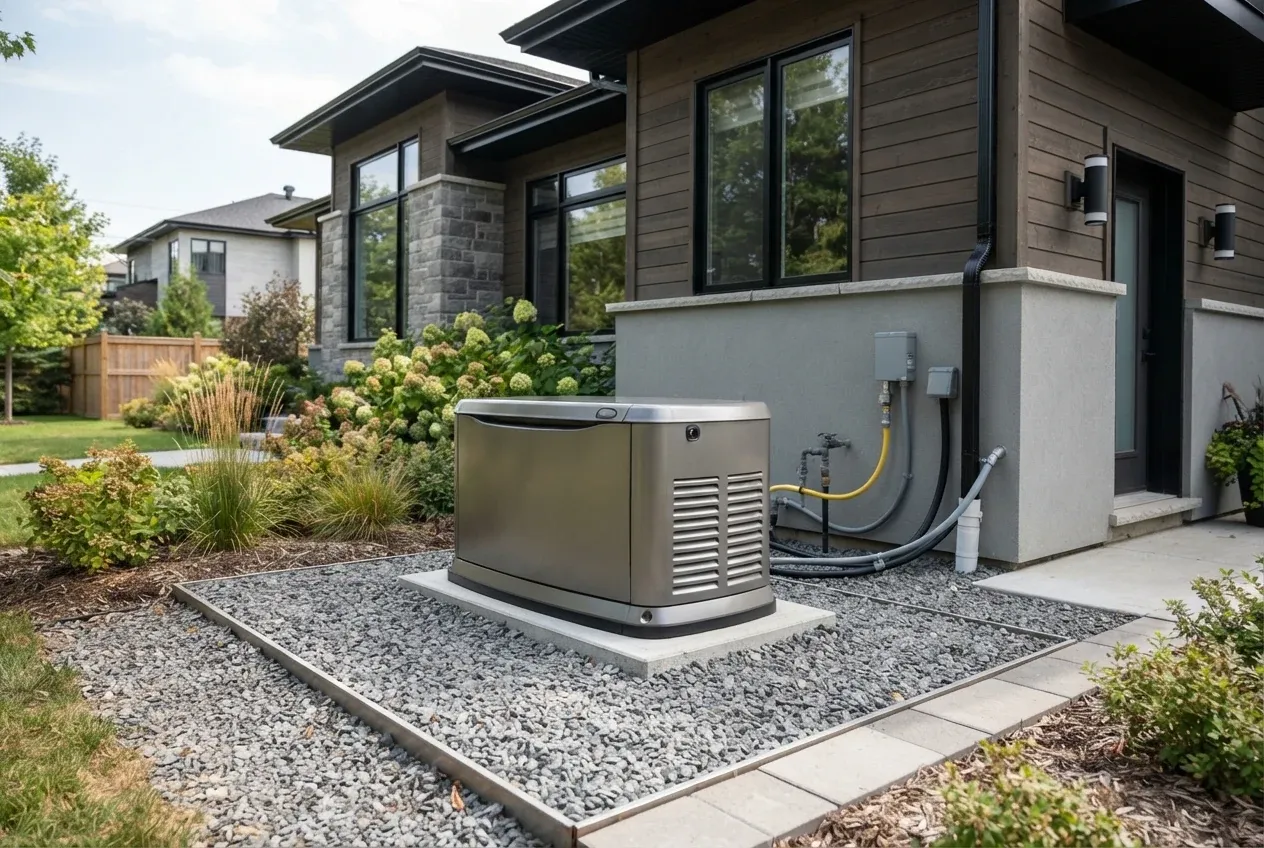
Want the essentials running in an outage? A licensed electrician sizes the generator and fits the transfer switch that keeps it off the utility lines.
Start with a call
Tell us what's going on and where the job is. We'll get a licensed electrician out, and you'll know the price before the job begins.
Why does the transfer switch matter more than the generator?
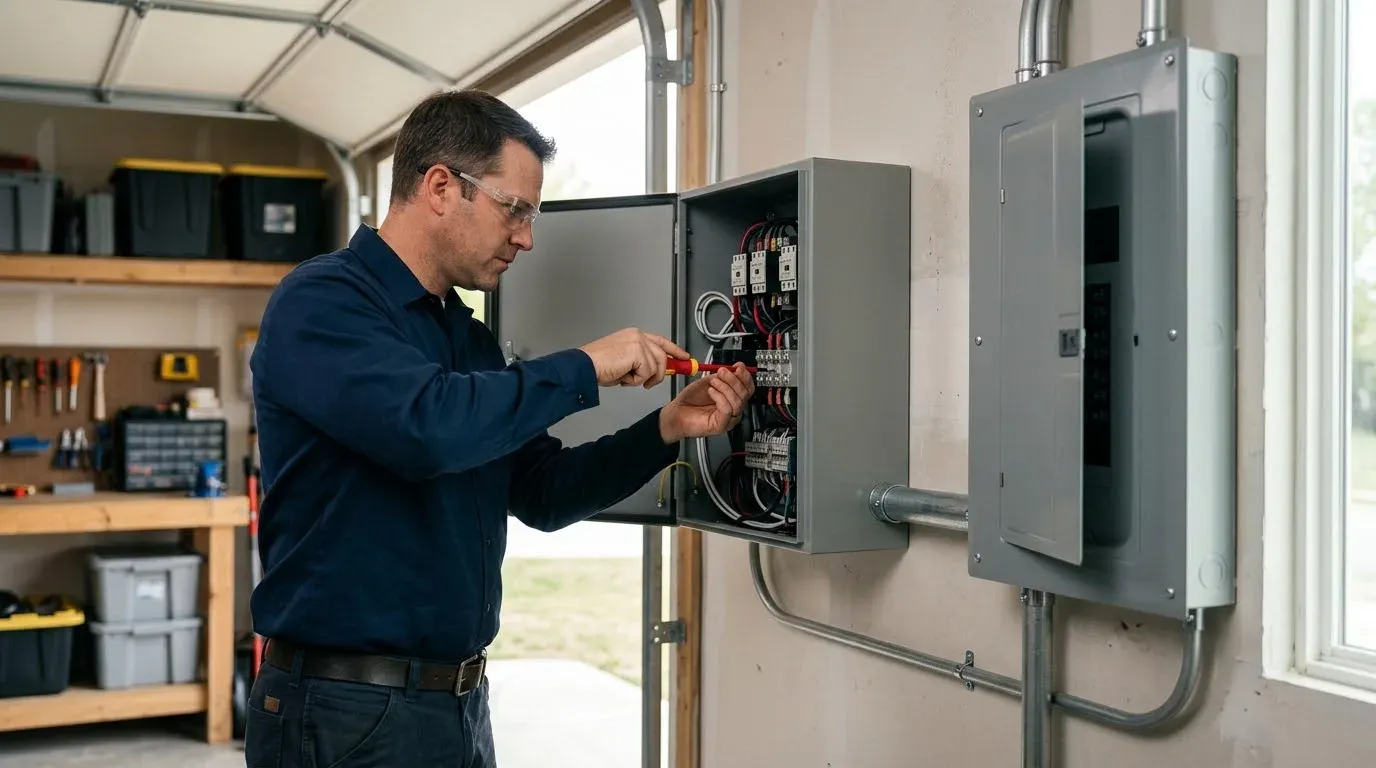
The generator makes power; the transfer switch decides where it goes. It disconnects your house from the utility before the generator feeds it, so the two can never be connected at once. When you call Hire Local Electrician about generator installation, that’s the part we’ll make sure gets planned properly, along with what you need running and where the unit can sit.
Backfeeding, sending generator power out onto the grid, is why the rules are strict. Line workers restoring power expect the lines to be dead. The double-ended “suicide cord” you’ll see described online is exactly how people get killed, and it’s never a safe shortcut.
Interlock, transfer switch or standby: which setup fits?
There are three common ways to hook a generator to a house, and the right one depends on how long your outages last and whether someone’s home to start it.
| Setup | How it works | Fits when |
|---|---|---|
| Portable generator with an interlock kit | A listed plate on the panel stops the main and generator breakers being on together. The generator plugs into an outdoor inlet | You’re home to start it and outages last hours, not days |
| Portable generator with a manual transfer switch | A small switch panel feeds a set list of circuits from the inlet | You want chosen circuits and a simple switchover |
| Standby generator with an automatic transfer switch | Starts on its own and switches over within seconds of an outage | Nobody may be home, or a sump pump, medical equipment or work can’t wait |
An interlock has to be listed for your panel’s make and model, and some older panels have none. That’s one more reason a panel upgrade sometimes comes up in generator planning.
Whole house or essential circuits?
A whole-house transfer switch carries the entire service and needs a generator big enough for it. An essential-circuits setup feeds a small subpanel with the fridge, the furnace controls, a sump pump, some lights and outlets, and gets by on a much smaller generator. For most homes the second gets most of the benefit for a lot less. Make a list of what truly has to run, then call.
Generators and the grid both put voltage spikes on your wiring when power switches over, so whole-home surge protection pairs well with a new install.
Why do generators get sized wrong?
Sizing on running watts is the usual mistake. Motors pull several times their running current for the moment they start, and a well pump, an AC compressor and a fridge all do it. A generator sized on running load stalls when the pump kicks on, which during an outage is exactly when you’ll notice. If the power is out now and something electrical is smoking or sparking, skip the planning and call for an emergency electrician.
Signs it's time to call
- Outages long enough to put food, heat or water at risk
- Medical equipment or a sump pump that can't go without power
- Working from home, where an outage means lost pay
- Extension cords running from a portable generator through a window
- A portable generator with no safe way to connect to the house
- Overhead lines in an area that loses power in most storms
Common problems
Where do generator setups go wrong?
Backfeeding
The serious one. A generator connected to the house without a transfer switch or interlock can push power back onto the utility lines, putting line workers in danger. It can also wreck the generator when grid power comes back. That's why a transfer switch is required, not optional.
Extension cords as the long-term plan
Cords through a window work, barely. They can't run anything hardwired, like the furnace, well pump or sump pump, and cords through openings are a trip and weather hazard.
Undersized generators
A generator sized on running watts without allowing for motor starting surge stalls the moment the well pump or AC kicks on.
Fuel not thought through
Natural gas, propane and diesel each change runtime, refueling and install work. A propane tank has to be sized for the outage you're planning for.
Placement and exhaust
Generators make carbon monoxide and need set clearances from windows, doors and vents. Placement is decided by code and the manufacturer, not by what looks best.
How the work usually goes
- Step 01
Decide what has to run
The whole house or a chosen list of circuits. That decides the generator size and the type of transfer switch.
- Step 02
Fuel and placement
Choosing the fuel, sizing a tank if there is one, and picking a spot that meets clearance rules.
- Step 03
Permits
Generator installs need an electrical permit and often a gas or mechanical permit too. Some places have noise or setback rules.
- Step 04
Pad and set
The base gets prepared and the unit set in place.
- Step 05
Transfer switch install
The transfer switch, the electrical heart of the job, goes in and the chosen circuits are connected to it.
- Step 06
Fuel hookup and start-up
Fuel is connected by the right trade, then the system is tested under load and the weekly self-test set.
Read this first
How do you run a generator safely?
Never connect a generator to the house without a properly installed transfer switch or listed interlock. Backfeeding can kill line workers.
Never run a generator indoors, in a garage, or near windows and vents. Carbon monoxide from generators kills people during outages every year.
Portable generators need a proper inlet box and a transfer switch or interlock to connect to the house.
Standby generators need scheduled service. One that's never tested often fails the day it's needed.
What affects the cost
What goes into the cost of a generator?
Every job is priced on what the electrician finds on site, and you only pay for work you agreed to.
- Generator size and whether it's air-cooled or liquid-cooled
- A whole-house transfer switch versus essential circuits only
- Fuel type, and whether a gas line or propane tank has to be run
- Distance from the generator to the panel
- Site prep and pad requirements
- Electrical, mechanical and gas permits
- Ongoing maintenance, which standby generators do need
Straight answers
Generator Installation questions
What size generator do I need?
It depends on what you want running. The fridge, furnace, some lights and a sump pump need far less than the whole house with central air. Allow for starting surge too, since well pumps, AC compressors and fridges pull several times their running current for a moment at startup.
How often does a standby generator need servicing?
Most manufacturers call for a yearly service plus oil changes based on run hours, and most units run a weekly self-test on their own. A generator left unserviced for years has a good chance of failing during the outage it was bought for, so plan for maintenance from day one.
Is a home battery an alternative to a generator?
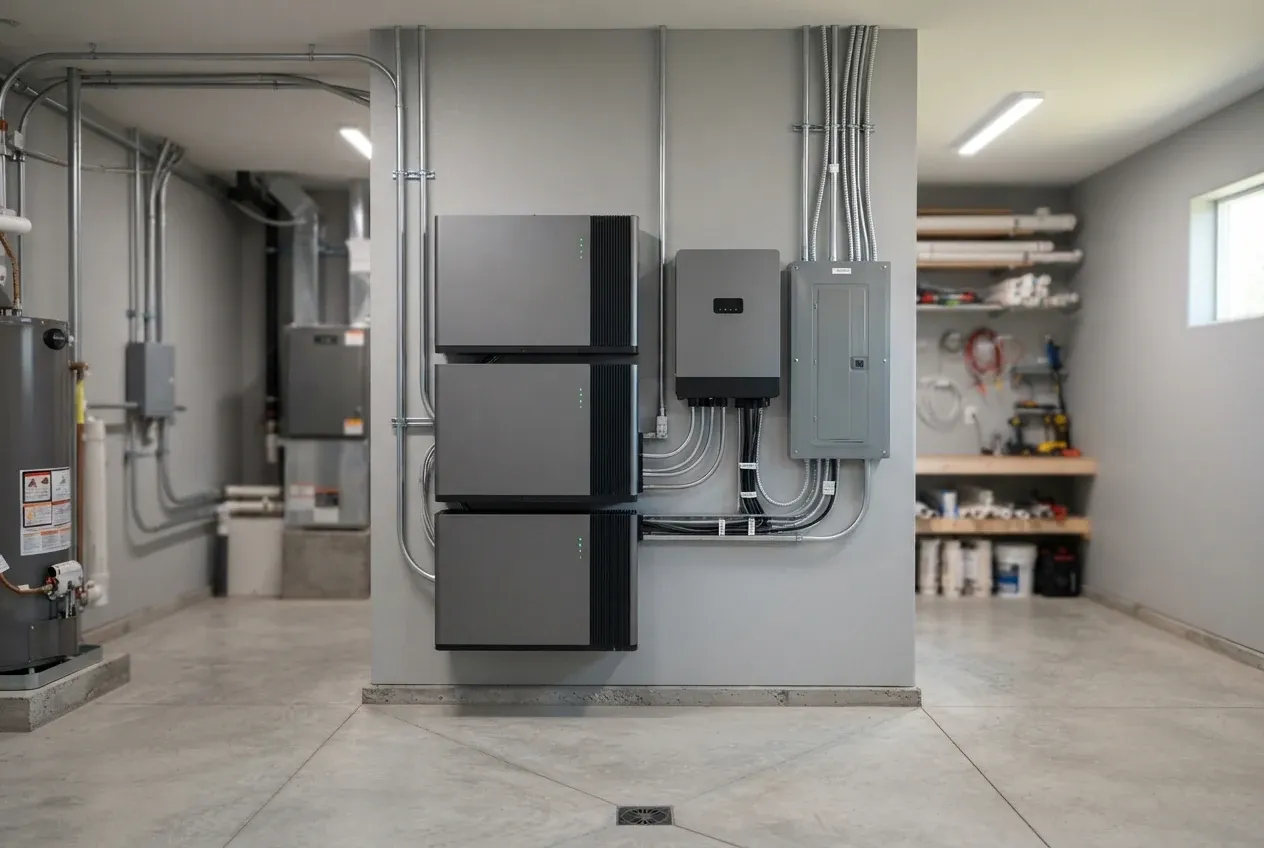
For some homes, yes. Batteries are silent, need no fuel and switch over instantly. Their limit is capacity, so they suit shorter outages and lighter loads, and paired with solar they can recharge during a long one. For multi-day outages with heavy loads, a fueled generator is usually still the practical choice.
Where can a standby generator go?
Outside, on a pad, with the clearances the manufacturer and your local code set from windows, doors, vents and sometimes property lines. It also needs a reasonable path for the gas line and the wiring to the transfer switch. Your electrician checks the spot before anything is ordered.
Before you dial
Want power through the next outage?
Your ZIP code, what the power is doing, and whether anything smells hot, sparks or buzzes.
We'll get a licensed electrician out to you, and you only pay for work you agreed to.