Service
EV Charger Installation for Level 2 Home Charging
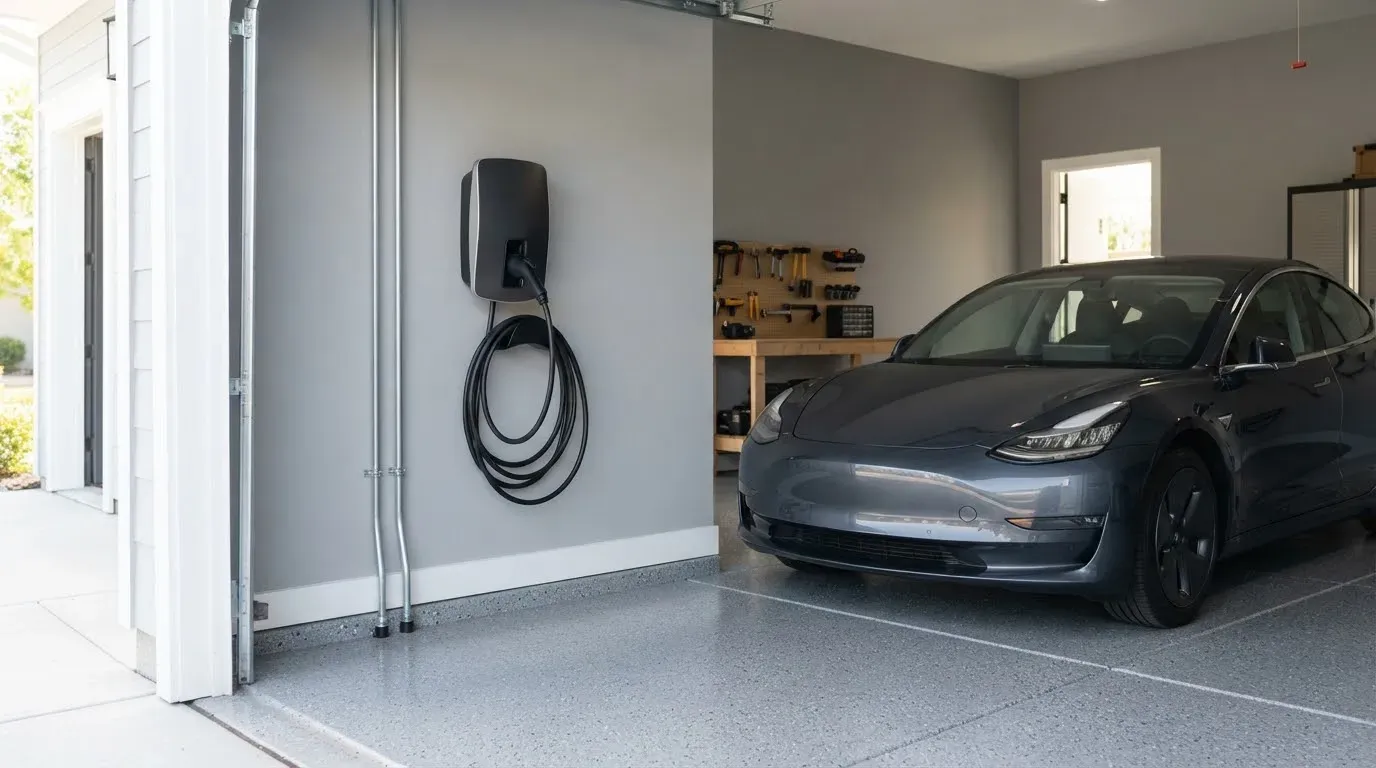
Tell us the car, your panel size and where you park. A licensed electrician checks your capacity first, then runs the dedicated circuit your charger needs.
Start with a call
Tell us what's going on and where the job is. We'll get a licensed electrician out, and you'll know the price before the job begins.
Why does the load calculation come first?
An EV charger is one of the biggest loads a house will ever carry, and it runs for hours, usually overnight while the heat or AC and the water heater are running too. That’s why an EV charger installation with Hire Local Electrician starts with your panel, not the charger. Tell us the car, the panel’s amp rating and where you park, and a licensed electrician works out what your service can handle before anything gets mounted.
Code treats charging as a continuous load, so the circuit has to be sized at 125% of what the charger draws. A charger pulling 32 amps needs a 40 amp circuit; one pulling 48 amps needs 60. Put that on a service already near its limit and the main breaker trips, or worse, wire runs hot.
Level 1 or Level 2: what circuit does each need?
Level 1 plugs into a regular outlet and adds about 5 miles of range an hour. Level 2 runs on a 240 volt dedicated circuit and adds about 25 miles an hour, according to the U.S. Department of Energy. Your car’s onboard charger can limit either one.
| Level 1 | Level 2 | |
|---|---|---|
| Voltage | 120 volts | 240 volts at home |
| Range added per hour | About 5 miles | About 25 miles |
| Circuit | An existing 15 or 20 amp outlet, ideally not shared | Dedicated: 40 amps for a 32 amp charger, 60 amps for a 48 amp charger |
| Permit | Usually none for using an existing outlet | Yes, almost everywhere |
| Fits | Plug-in hybrids and short commutes | Daily driving and a full battery by morning |
If you go with a plug-in Level 2 charger, it usually goes on a 240 volt outlet such as a NEMA 14-50; outlet installation covers the outlet side.
What if the panel is already near capacity?
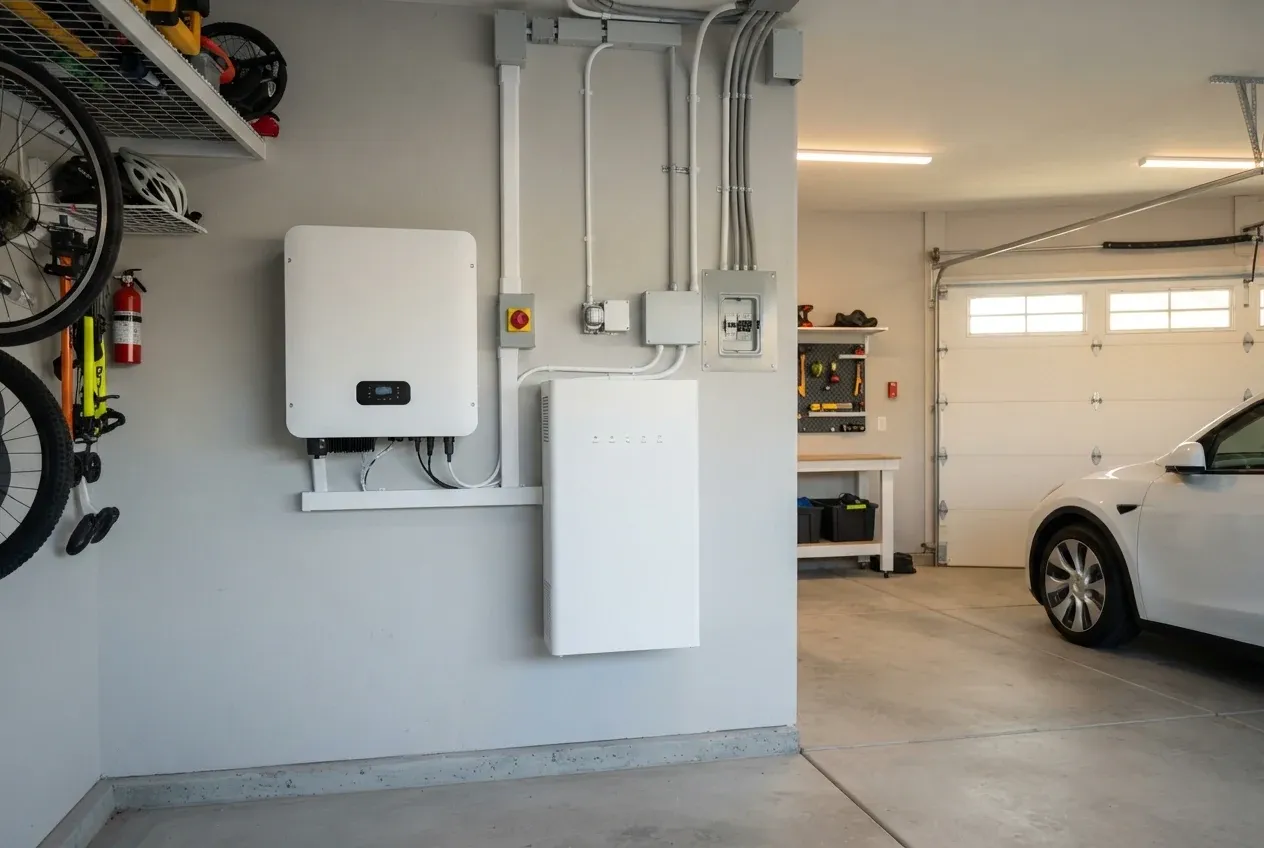
There’s a middle path. A load management device watches the whole house and slows or pauses charging when other demand runs high, which lets many homes add charging without a full electrical panel upgrade. It’s a compromise if you need the fastest possible charge every night. For ordinary overnight charging it usually works well. More on that in putting an EV charger on a 100 amp panel.
Should you run the circuit before you buy the car?
If walls are already open for a remodel, or the panel is being replaced anyway, run the charger circuit now. Pulling wire through open framing costs a fraction of coming back later to fish it through finished walls, and the circuit can sit capped and ready until the car shows up.
Signs it's time to call
- A new electric car or plug-in hybrid in the driveway
- Charging on a regular outlet and finding it far too slow
- Wanting the circuit in place before the car arrives
- An older panel with limited capacity or no open slots
- Two cars that both need charging
- A detached garage or a driveway with no suitable circuit nearby
Common problems
What can hold up an EV charger install?
Not enough panel capacity
A Level 2 charger usually needs a 40 to 60 amp dedicated circuit. A 100 amp house with modern loads often can't carry that without a service upgrade or a load management device.
Level 1 is too slow for daily driving
A standard outlet adds only a few miles of range per hour. For a car driven every day that often falls short, and that's what starts most installs.
A long way from panel to parking spot
The wire run to a detached garage or the far side of a driveway is often the biggest cost in the job, and long runs may need heavier wire to keep voltage drop in check.
No open breaker slots
Even with enough capacity, a full panel means adding a subpanel or replacing the panel.
Outdoor install rules
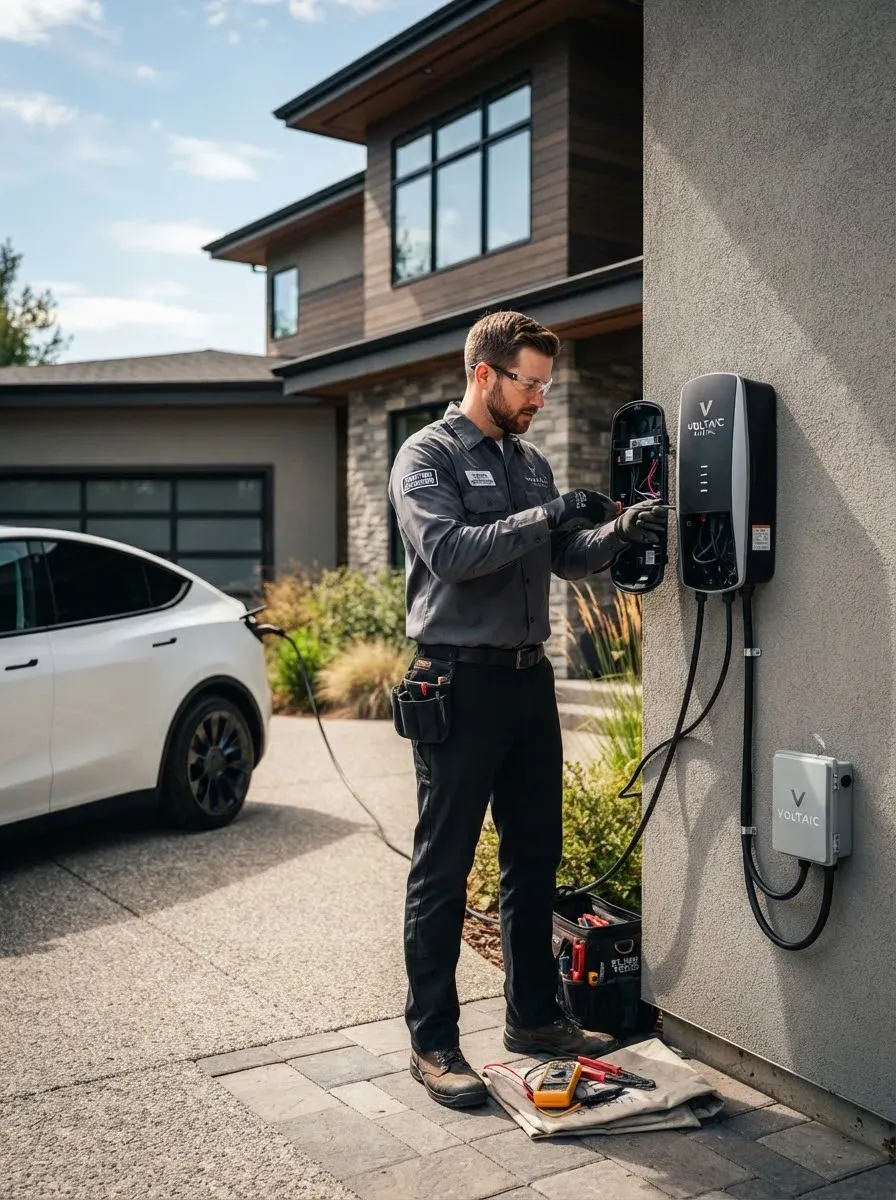
Chargers mounted outside need equipment rated for the location, weatherproof connections and GFCI protection where code calls for it.
How the work usually goes
- Step 01
Load calculation
Existing demand plus the charger, worked out properly to see whether the service can carry it. Everything after depends on this number.
- Step 02
Panel check
Looking for open slots and deciding whether a service upgrade, subpanel or load management device is needed.
- Step 03
Plan the route
Picking the wire route to the charger spot, with distance and voltage drop in mind.
- Step 04
Permit
A charger circuit needs an electrical permit and an inspection in nearly every jurisdiction.
- Step 05
Install circuit and charger
The dedicated circuit gets run, the breaker fitted, and the charger mounted and connected.
- Step 06
Test and set up
Charging is tested under load, and any app or Wi-Fi setup on the charger gets confirmed.
Read this first
Can you charge an EV from any outlet?
Charging pulls a heavy load for hours at a time. It needs its own correctly sized circuit, never a shared one.
Never charge through an extension cord. Even heavy cords aren't built for that much continuous load.
Outdoor chargers need equipment rated for the location and proper weatherproofing.
The load calculation comes before the install. A big continuous load on a service already near its limit trips the main breaker at best.
What affects the cost
What adds to the cost of a charger install?
Every job is priced on what the electrician finds on site, and you only pay for work you agreed to.
- Distance from the panel to the charger spot
- Whether the panel has capacity or the service needs upgrading
- Whether a subpanel is needed
- Indoor or outdoor mounting, and any trenching to a detached garage
- The charger itself, usually bought separately from the install
- Permit and inspection fees
- Wall construction and how much of the route is open
Straight answers
EV Charger Installation questions
Can I put an EV charger on a 100 amp panel?
Sometimes. A 100 amp house with gas heat, gas cooking and no central air often has room for a charger circuit. With electric heat, an electric range or a heat pump, it usually doesn't. A load calculation gives the answer, and where it's close, a load management device can avoid a full upgrade.
Do I need a permit for an EV charger?
Yes, in nearly all jurisdictions. A new dedicated high-amp circuit is permitted, inspected work. Some utilities also want to know about the added load. Skipping the permit causes trouble when you sell and can complicate an insurance claim.
Should my charger be hardwired or plugged in?
Hardwired chargers can usually run at higher amps and skip the outlet, which is a wear point under hours of load. Plug-in units are easier to replace or take with you when you move. Local code sometimes decides it, especially outdoors, and your electrician will know the local rule.
Can I plug my charger into my dryer outlet?
Not as a daily setup. A dryer circuit is usually 30 amps, which caps a charger at 24 amps, and swapping plugs back and forth wears out the outlet. Listed load-sharing devices let a dryer and charger share one circuit safely. Your electrician can tell you whether that suits your panel.
Can I charge two cars at home?
Yes, a few ways. Two separate circuits if capacity allows, one charger with two cables that splits power between them, or two connected chargers that share the load so the total stays within your service. The last is often the practical answer when capacity is tight.
Before you dial
Car on the way?
Your ZIP code, what the power is doing, and whether anything smells hot, sparks or buzzes.
We'll get a licensed electrician out to you, and you only pay for work you agreed to.