Service
Outlet Installation, GFCI Upgrades and Dedicated Circuits
Tell us where you need power and what plugs in there. A licensed electrician checks the circuit can carry it, then installs the right outlet for the spot.
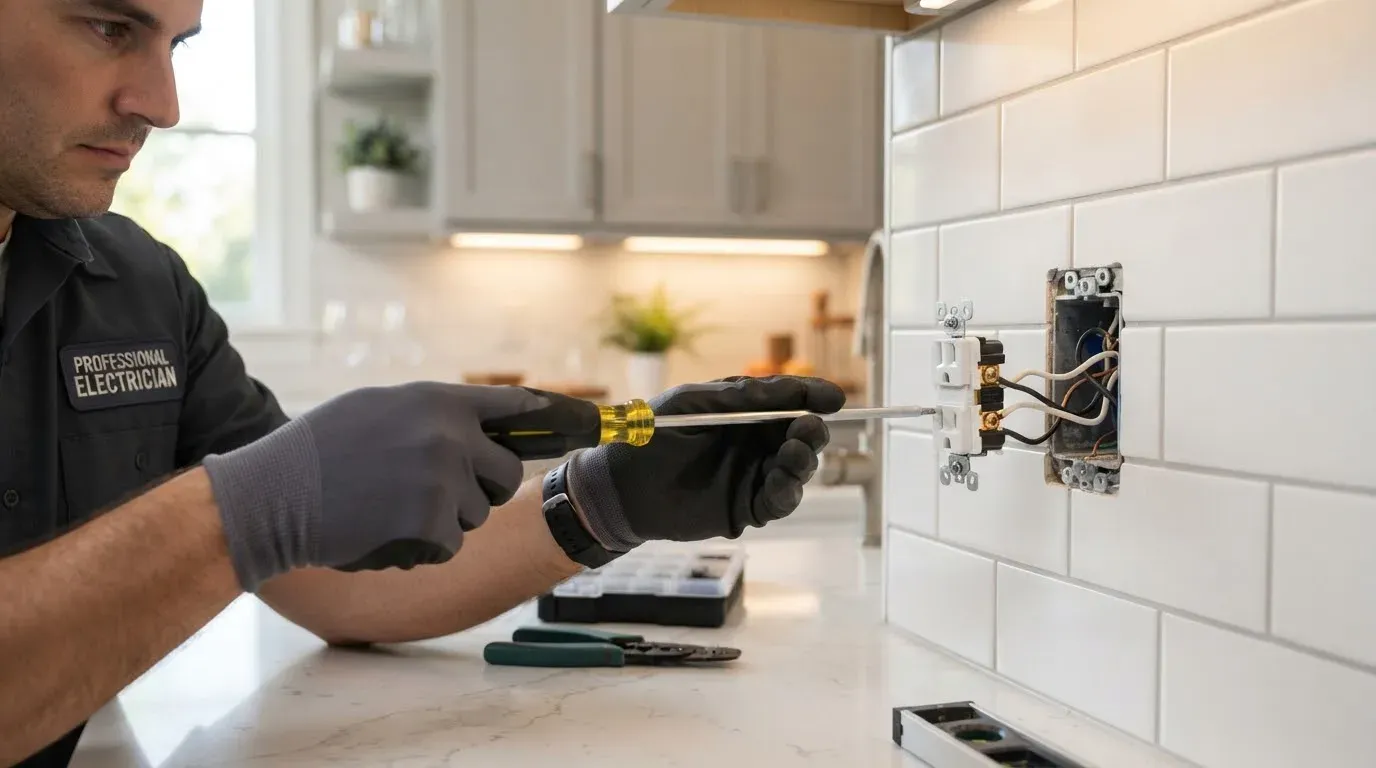
Start with a call
Tell us what's going on and where the job is. We'll get a licensed electrician out, and you'll know the price before the job begins.
Where do you need an outlet, and what kind?
Most outlet jobs start with a cord that never gets unplugged: a power strip behind the TV, an extension cord across the garage, a space heater sharing a circuit with half the bedroom. Call Hire Local Electrician with where you need power and what plugs in there, and we’ll get a licensed electrician out for the outlet installation. The appliance matters, because it decides whether you need a new outlet or a whole new circuit.
Code sets minimum spacing for outlets so no spot along a wall is far from one, and kitchen counters have tighter rules of their own. Those rules exist to get rid of extension cords, which is the problem adding outlets actually solves.
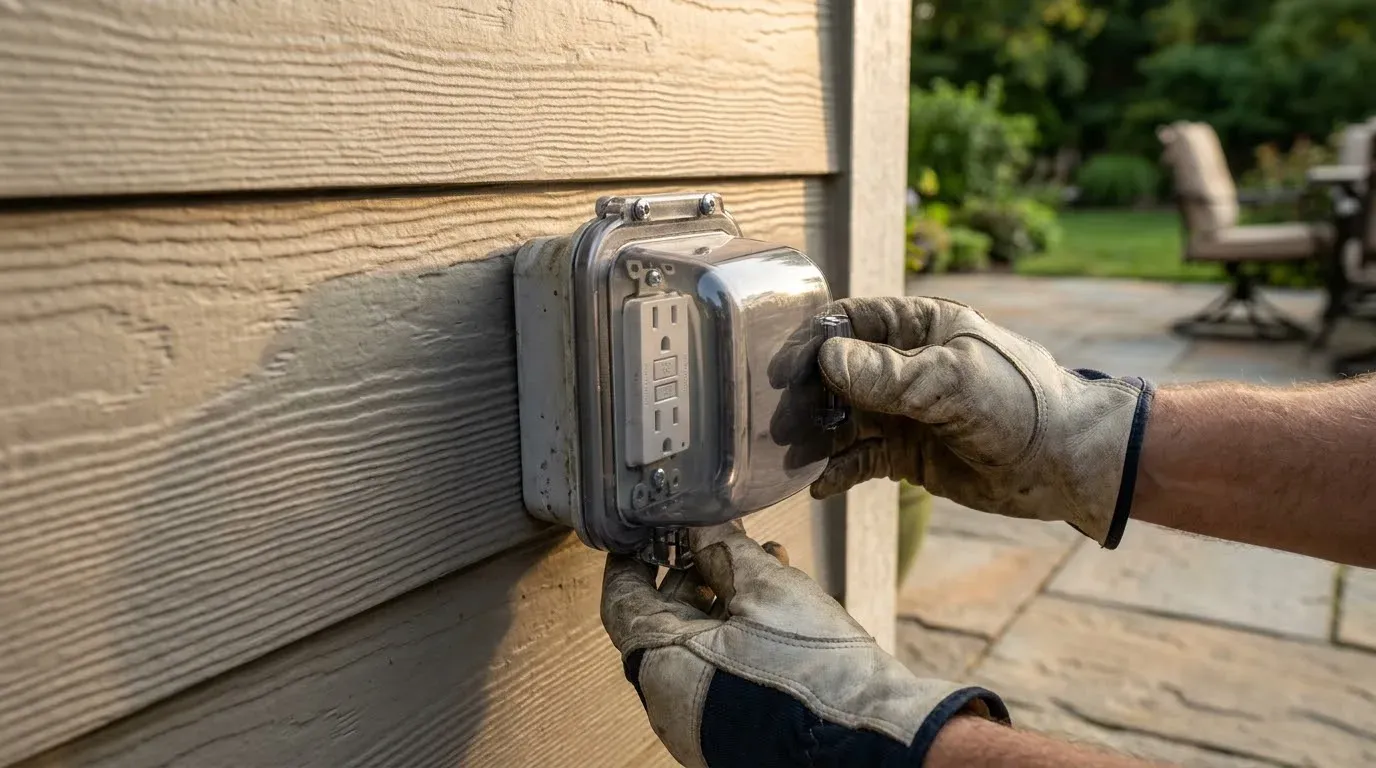
Which outlet goes where?
Each outlet type has a job and a place in the house. Here’s how they usually line up; local code may differ, and requirements depend on which code edition your area follows.
| Outlet type | What it’s for | Where it usually goes |
|---|---|---|
| Standard 15 amp | Lamps, chargers, everyday plug-ins | Bedrooms, living rooms, hallways |
| 20 amp (T-shaped slot) | Higher-draw plug-ins on a 20 amp circuit | Kitchen counters, laundry, bathrooms, garage |
| GFCI | Cuts power when current leaks toward a shock path | Bathrooms, kitchens, garages, outdoors, basements, laundry areas |
| AFCI or dual-function | Arc protection where the breaker can’t provide it | First outlet on a circuit in living areas of older homes |
| Weather-resistant (WR) | Stands up to moisture and sun | Outdoors, under an in-use cover |
| Tamper-resistant (TR) | Shutters keep keys and pins out | Required in most new and remodeled homes |
| 240 volt (such as NEMA 14-50) | Ranges, dryers, EV chargers, welders | Its own dedicated circuit |
| USB combo | Charging without the bricks | Kitchens, bedrooms, desks |
If a plug-in EV charger is the reason for the 240 volt outlet, the circuit sizing is covered under EV charger installation.
Why do outlets quit after a few years?
Usually because of how they were wired. Most outlets can take a wire two ways: pushed into a hole in the back, or wrapped under a screw. The push-in way is faster, and it’s the most common reason outlets start cutting in and out years later. Screw terminals cost nothing extra in parts; they just take a minute longer. An outlet that’s already flaky is a job for electrical repair.
When does an appliance need its own circuit?
When it draws enough to trip a shared one. Microwaves, dishwashers, disposals, washers, window AC units and space heaters are the usual suspects, and code requires dedicated circuits for several of them. Tell us what’s going in when you call; it decides whether the job is an outlet or a new circuit from the panel. If breakers are already tripping, circuit breaker repair explains what they’re reacting to.
Signs it's time to call
- Extension cords or power strips that never get unplugged
- Two-prong outlets with no ground you want replaced
- No GFCI protection in the kitchen, bathrooms, garage or outside
- Outlets that don't grip a plug anymore
- A new appliance that needs its own circuit
- A garage or patio with no weather-resistant outlet
Common problems
Why add or replace outlets?
Too few outlets for how you live
Houses wired decades ago were laid out for a handful of plug-ins. Permanent extension cords are the giveaway, and they're a real fire risk, not just untidy.
No GFCI protection
Code has required GFCI protection in wet and damp spots for years, and the list keeps growing. Older homes don't have to retrofit, but kitchens, bathrooms, garages, basements and outdoor outlets without it leave you without real shock protection.
Three-prong outlets with no ground
A common and risky shortcut, a three-prong outlet on a two-wire circuit. It looks grounded and isn't, so surge strips do nothing and appliances lose their safety path.
Worn-out outlets
The contacts inside an outlet lose their grip over time. A plug that falls out is making poor contact, and poor contact under load makes heat.
High-draw appliances on shared circuits
Microwaves, window AC units and space heaters on general-purpose circuits are one of the most common reasons breakers keep tripping.
How the work usually goes
- Step 01
Check the circuit
Your electrician works out whether the existing circuit can take another outlet or a new circuit is needed.
- Step 02
Plan the route
Where the cable will run, and how much wall or ceiling access that takes.
- Step 03
Run cable and set boxes
Cable runs to the new location and the box goes in at the right height.
- Step 04
Make proper connections
Wires go under screw terminals, not into push-in holes in the back, which are the usual cause of outlets that quit years later.
- Step 05
Test
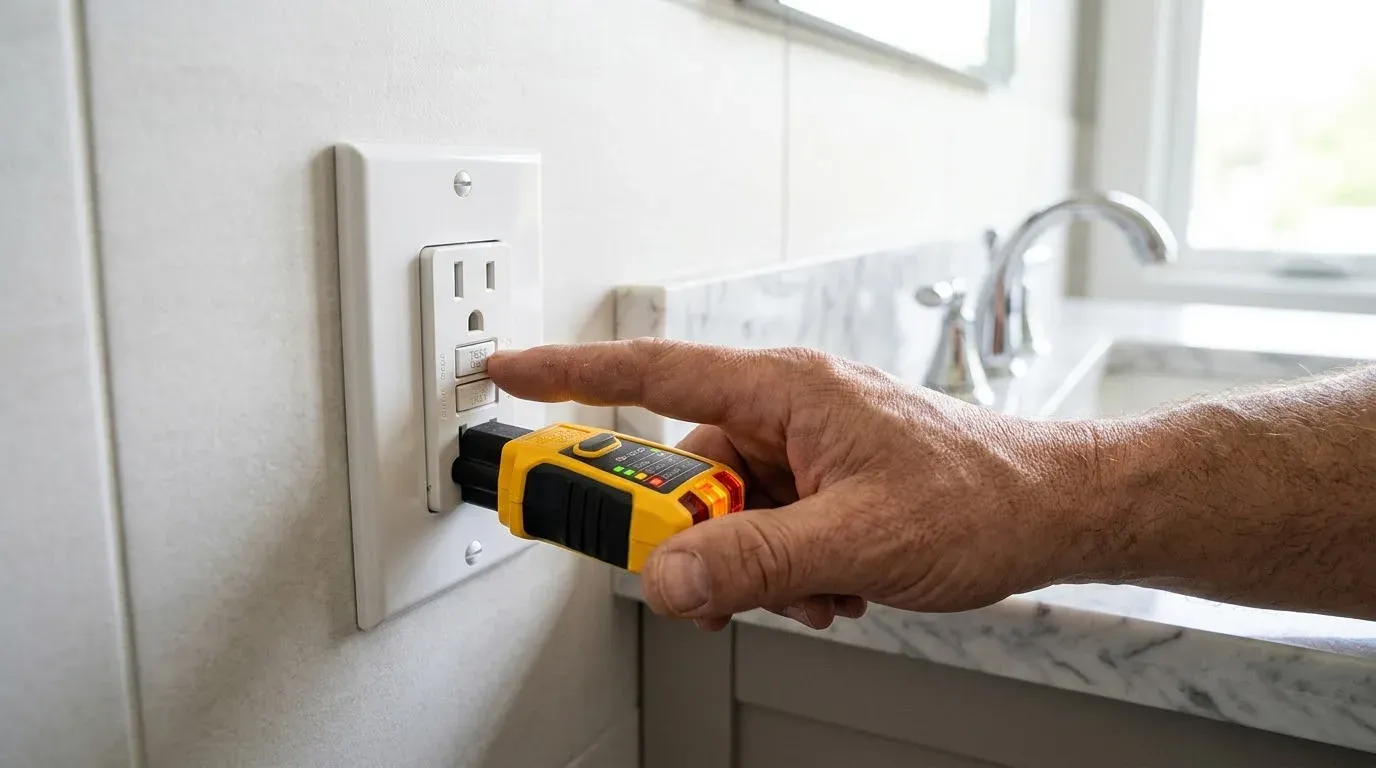
Polarity, ground and GFCI function get checked with a proper tester, not by plugging in a lamp.
Read this first
When is an outlet unsafe to keep?
Never put a three-prong outlet on a two-wire circuit without running a ground or using GFCI protection with the required "No equipment ground" label. Otherwise it looks protected and isn't.
An outlet that's loose in the box, cracked or no longer grips a plug should come out of service, not get another year of use.
Tamper-resistant outlets are required in new and remodeled homes in most places, and they're worth fitting anywhere small kids live.
What affects the cost
What does adding an outlet cost?
Every job is priced on what the electrician finds on site, and you only pay for work you agreed to.
- Distance from the existing circuit or the panel
- Whether a whole new circuit is needed
- Wall type and how much access the route takes
- Outlet type, since GFCI, AFCI, weather-resistant and USB outlets cost more than standard
- How many outlets, since several in one visit cost less each
- Drywall or plaster patching afterwards
Straight answers
Outlet Installation questions
Can an outlet be added to an existing circuit?
Often, yes, as long as the circuit has room and the addition stays within what the wire and breaker allow. The existing load gets checked first. For high-draw appliances the answer is usually no; they need their own circuit, which is why microwaves and window AC units trip breakers on shared ones.
My house has two-prong outlets. What are my options?
Three, roughly. Run a ground to the outlets, the most thorough option. Put GFCI protection at the start of the circuit and label the outlets "No equipment ground", which protects people but isn't a true ground. Or rewire the circuit. Anything feeding computers or surge strips really needs a real ground.
Why is my outlet warm?
A warm plug on a space heater or hair dryer can be normal. A warm outlet face with little or nothing running, a hot plate or a burned smell is not. It usually means a loose or worn connection heating up. Unplug everything on it, switch the circuit off if you can, and call.
How high should outlets be?
Common practice puts wall outlets about 12 to 18 inches off the floor and kitchen counter outlets about 42 inches up. Accessibility rules and local amendments can change that. Kitchen counters also have spacing rules, so no spot along the counter is too far from an outlet.
Do all kitchen outlets need GFCI?
Countertop outlets have needed GFCI protection for years, and the 2023 National Electrical Code extends it to all kitchen outlets. Which rule applies depends on the code edition your area uses. One GFCI outlet or breaker can protect the others after it on the same circuit.
Before you dial
Running out of outlets?
Your ZIP code, what the power is doing, and whether anything smells hot, sparks or buzzes.
We'll get a licensed electrician out to you, and you only pay for work you agreed to.