Service
Circuit Breaker Repair for Trips and Failed Breakers
Breaker keeps tripping? Tell us what's running when it goes, and a licensed electrician traces the cause and fixes the circuit, not only the breaker.
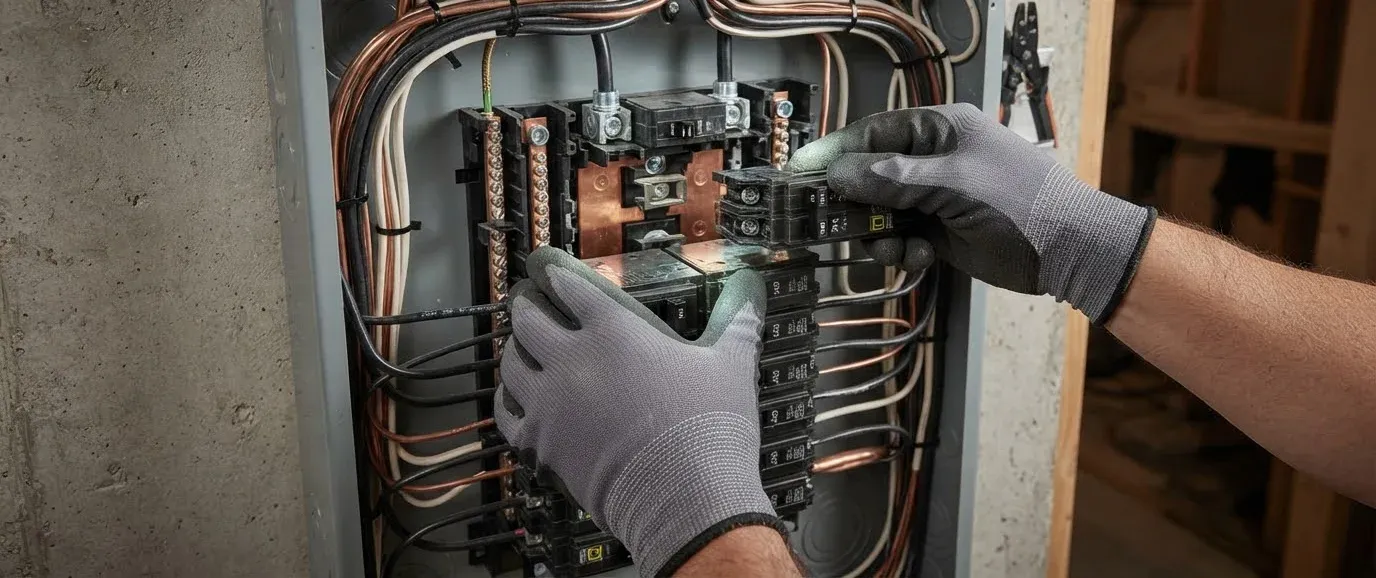
Start with a call
Tell us what's going on and where the job is. We'll get a licensed electrician out, and you'll know the price before the job begins.
What is a circuit breaker protecting?
A circuit breaker protects the wire in the wall. It isn’t there for your appliance or the panel; it trips before the wire carries more current than it can safely handle. When you call Hire Local Electrician about circuit breaker repair, that’s where we start: what the breaker is reacting to, and whether the breaker itself is still sound.
A breaker that trips is reporting a real condition. The useful question is which one: overload, short circuit, ground fault, arc fault, or a breaker that has started to fail. Our guide on why breakers keep tripping walks through how each one behaves at the panel.
What happens when a breaker stops tripping?
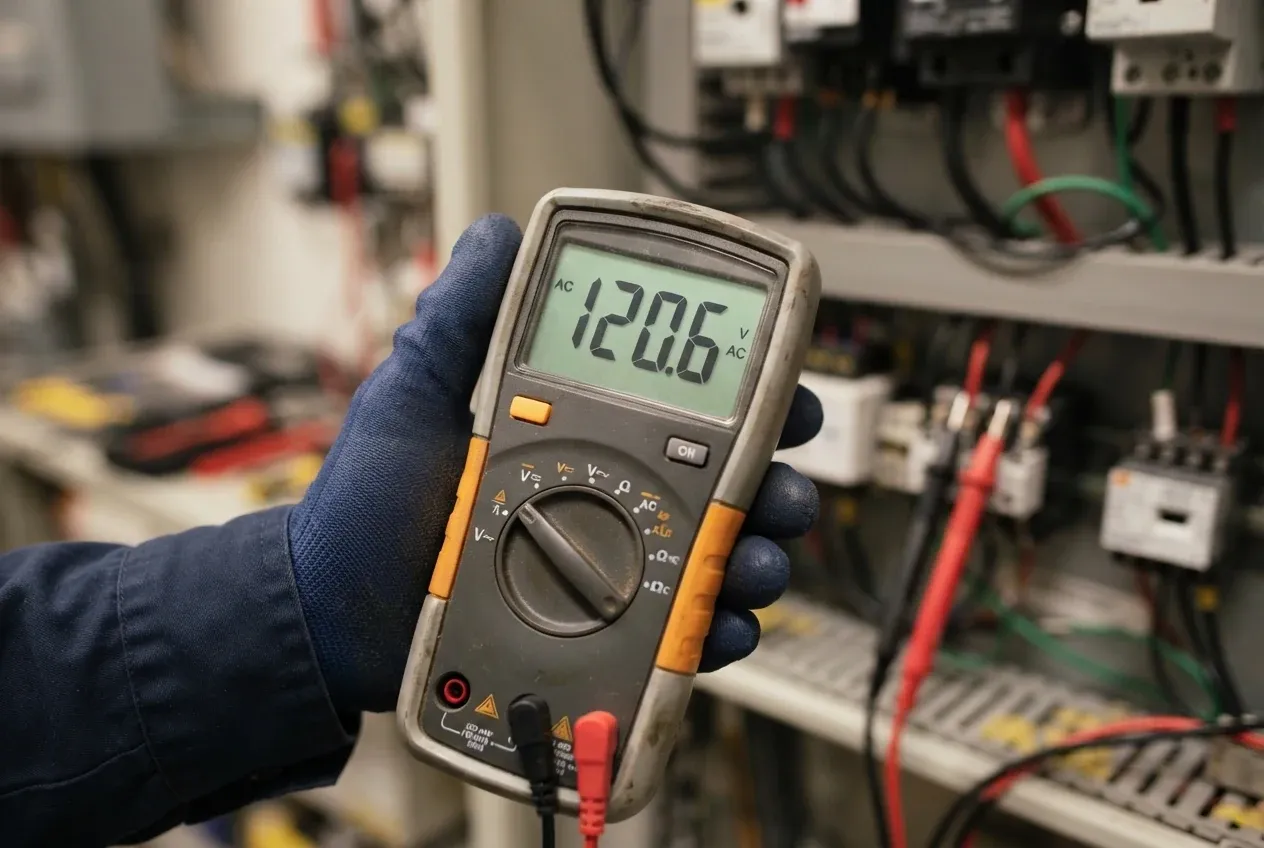
A breaker that no longer trips leaves the circuit with no protection at all, and nothing in the house tells you. It gets far less attention than nuisance tripping and matters more. It’s the main worry with certain old panel makes, Federal Pacific Stab-Lok among them. If your panel is one of those, testing is worth doing with no symptoms at all, and an electrical panel upgrade is often where that testing leads.
GFCI or AFCI: what’s the difference?
A GFCI protects people from shock, and an AFCI protects the house from fire. They watch for different faults, so a lot of circuits need both. Dual-function breakers do both jobs in one. When a GFCI outlet trips and won’t come back, start with why a GFCI outlet won’t reset.
| GFCI | AFCI | |
|---|---|---|
| What it detects | Current leaking to ground, the path a shock takes | Arcing from loose connections, nicked cable or crushed cords |
| What it protects | People | The house |
| Where code usually calls for it | Bathrooms, kitchens, garages, outdoors, basements, laundry areas, near sinks | Bedrooms, living and family rooms, kitchens, hallways, closets, laundry areas |
| Comes as | A breaker or an outlet | A breaker, or an outlet at the first box on the circuit |
Where each is required depends on the code edition your city or county has adopted, so local rules may differ from this list.
Can you add AFCI or GFCI protection to an older home?
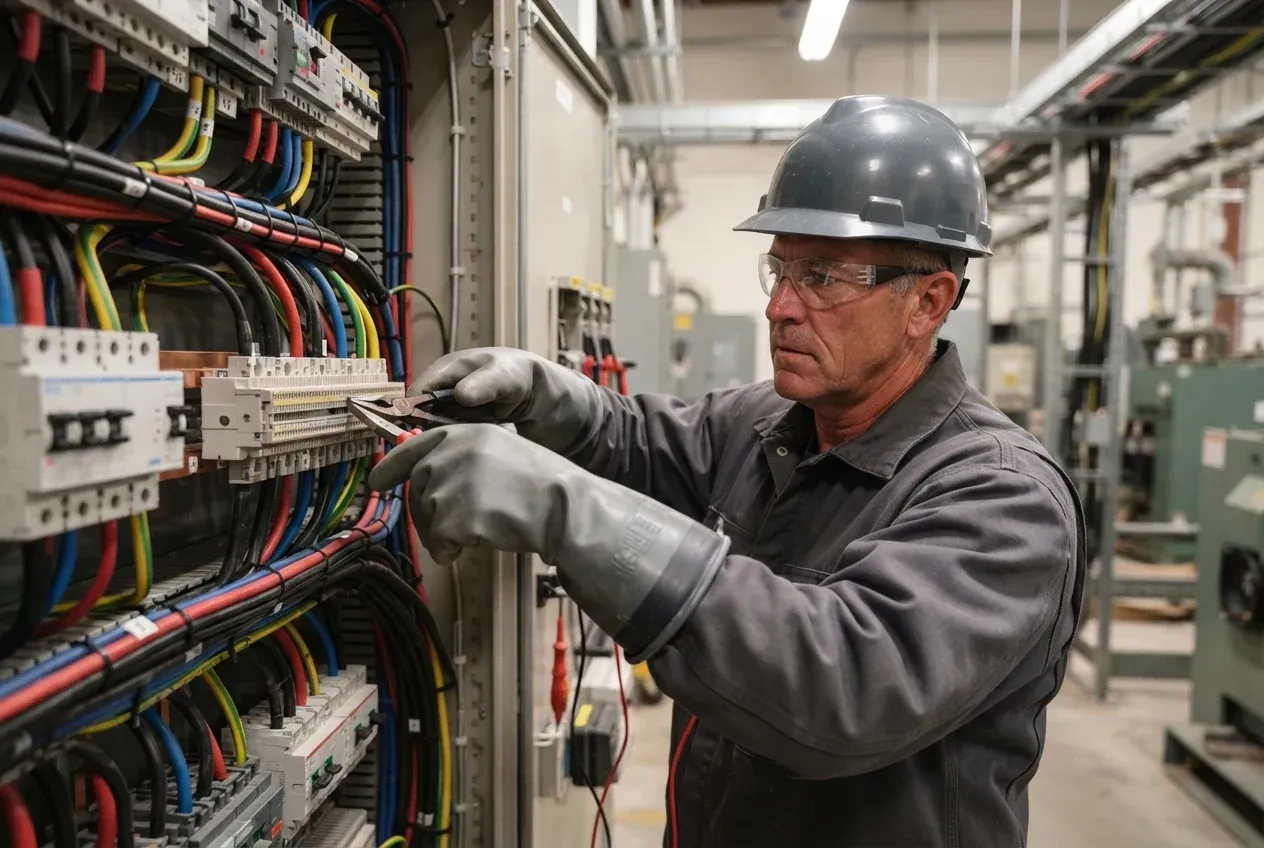
Yes, and older homes aren’t required to, but it’s one of the better-value electrical improvements a house can get. Bedrooms, kitchens, bathrooms, garages and outdoor circuits come first. On some older wiring, a new AFCI will trip right away because it’s finding damage that was always there; that becomes electrical troubleshooting to find the bad spot before the breaker goes back in.
If a breaker is hot, smells burned or the panel is crackling, don’t wait for a booked visit. That’s an emergency electrician call.
Signs it's time to call
- A breaker trips again and again under normal use
- A breaker won't reset, or resets and trips straight away
- A breaker feels hot or shows discoloration
- A breaker has stopped tripping even when the circuit is plainly overloaded
- Buzzing or crackling from the panel
- Bedrooms, kitchens or bathrooms with no AFCI or GFCI protection
Common problems
Why does a breaker trip or fail?
A real overload
Too much plugged into one circuit. The breaker is doing its job. The fix is moving load or adding a circuit, never a bigger breaker, because a larger breaker on the same wire takes away the protection that wire depends on.
Short circuit
A hot wire touching a neutral or ground pulls a huge current and trips the breaker instantly. That's a fault to find, not a breaker to keep resetting.
Ground fault
Current leaking to ground, often through water or damaged insulation. GFCI devices catch tiny imbalances and trip. Repeat GFCI trips in damp spots usually mean a real fault, not a nuisance.
Arc fault
AFCI breakers spot the electrical signature of arcing, a fire risk an ordinary breaker ignores. Frequent AFCI trips can point to damaged cable or a loose connection somewhere on the run.
Worn or failed breaker
Breakers are mechanical and they age. One that has tripped hundreds of times, or sat in a panel for decades, can turn touchy or, worse, stop tripping altogether.
How the work usually goes
- Step 01
Find out what trips it
Your electrician works out whether the trip follows load, happens instantly or comes and goes, and on which part of the circuit.
- Step 02
Split the circuit into sections
Disconnecting sections one at a time narrows the fault to a specific run or device.
- Step 03
Test the breaker itself
The breaker gets checked on its own to see whether it's responding correctly or has failed.
- Step 04
Fix the fault or replace the breaker
Depending on what turns up: the circuit fault gets repaired, the breaker gets replaced, or both.
- Step 05
Prove it under load
The circuit runs under a realistic load to confirm the problem is gone.
Read this first
Can you just fit a bigger breaker?
Never swap a tripping breaker for a higher-rated one. The breaker is sized to the wire, and a bigger one lets the wire overheat before it trips.
Don't keep resetting a breaker that trips instantly. It's catching a fault, and forcing it on takes away the protection.
A breaker that no longer trips on overload is more dangerous than one that trips too often.
Wires inside the panel stay live with the main breaker off.
What affects the cost
What does breaker repair cost?
Every job is priced on what the electrician finds on site, and you only pay for work you agreed to.
- Whether it's a straight breaker swap or a circuit fault that has to be found
- Breaker type, since AFCI and GFCI breakers cost a lot more than standard ones
- Panel make, as some old panels take breakers that are scarce or no longer made
- How long an on-and-off fault takes to track down
- Whether the panel has room or a new circuit is needed
Straight answers
Circuit Breaker Repair questions
My breaker trips when the microwave and kettle run together. Is that a fault?
Usually it's a plain overload, two high-draw appliances on one kitchen circuit pulling more than it's rated for. The fix is a dedicated circuit for one of them. The wrong fix is a bigger breaker, which leaves the same wire carrying more current than it can safely handle.
Why won't my breaker reset?
Most breakers need the handle pushed fully to OFF before they'll go back ON. If it still won't hold, or snaps off the moment you reset it, there's likely a short or ground fault on that circuit, or the breaker has failed. Leave it off after two tries and call.
Why does my GFCI trip every time it rains?
Water is reaching an outdoor outlet, a light fixture or a buried cable and leaking current to ground, which is exactly what a GFCI is built to catch. The GFCI is working. The fix is finding where the water gets in, often a cracked outdoor cover, a failed fixture gasket or a damaged underground run.
Can a circuit breaker wear out?
Yes. Every trip wears the mechanism a little. An old breaker can start tripping on loads it used to handle, or fail the dangerous way and stop tripping at all. Breakers in older panels that have tripped many times are worth testing.
Why is my breaker hot to the touch?
Slightly warm under a heavy load can be normal. Hot, discolored or smelling of burning plastic usually means a loose wire at the breaker or a poor grip on the bus bar, and that heat feeds on itself. Turn off what's running on that circuit and call.
Do I need a new panel to add AFCI breakers?
Usually not. AFCI breakers are made for most current panel types and can go in one at a time. It turns into a panel question only when an old panel has no compatible AFCI breakers, or has no room left.
Before you dial
Breaker tripping again?
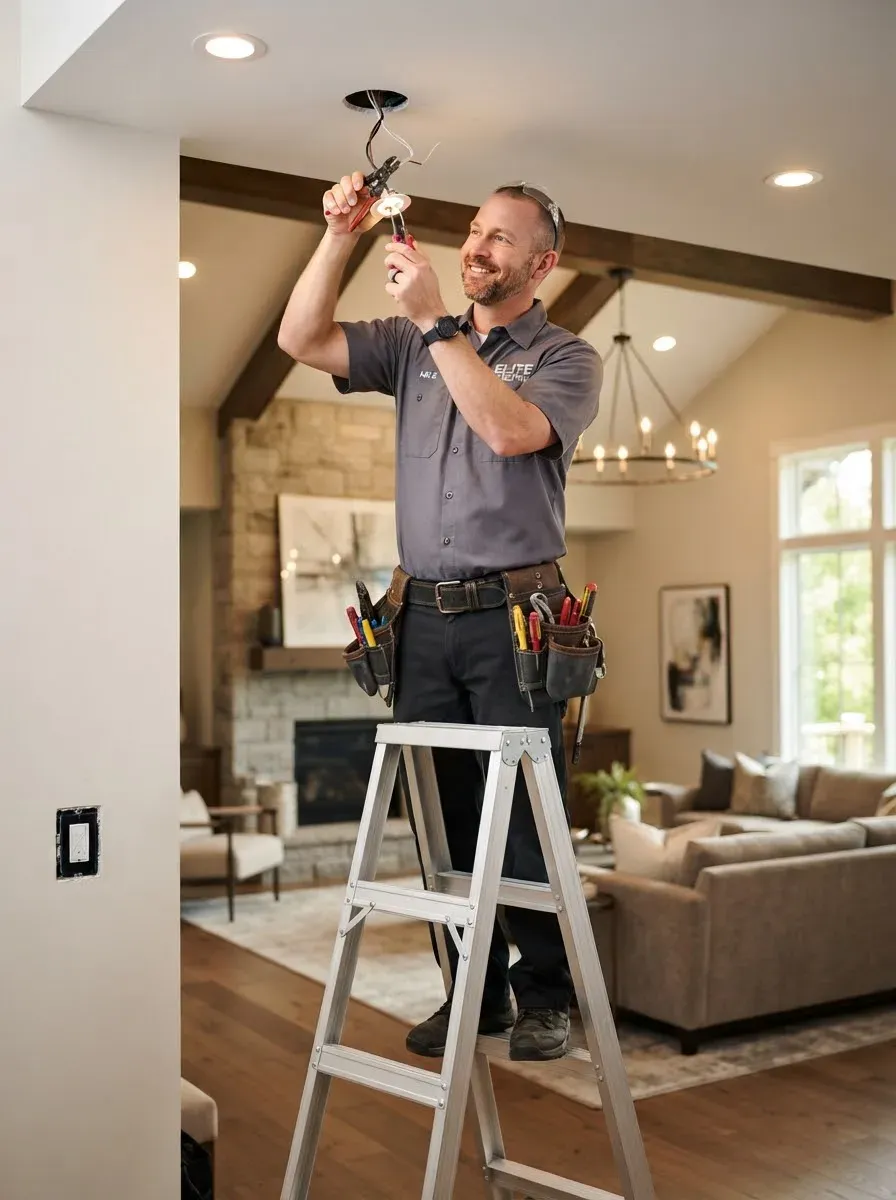
Your ZIP code, what the power is doing, and whether anything smells hot, sparks or buzzes.
We'll get a licensed electrician out to you, and you only pay for work you agreed to.