Service
Home Rewiring for Old, Unsafe or Aluminum Wiring
Tell us the age of the house and what you've spotted. A licensed electrician maps what's in the walls first, so only the circuits that need it get rewired.
Start with a call
Tell us what's going on and where the job is. We'll get a licensed electrician out, and you'll know the price before the job begins.
When does a house need rewiring?
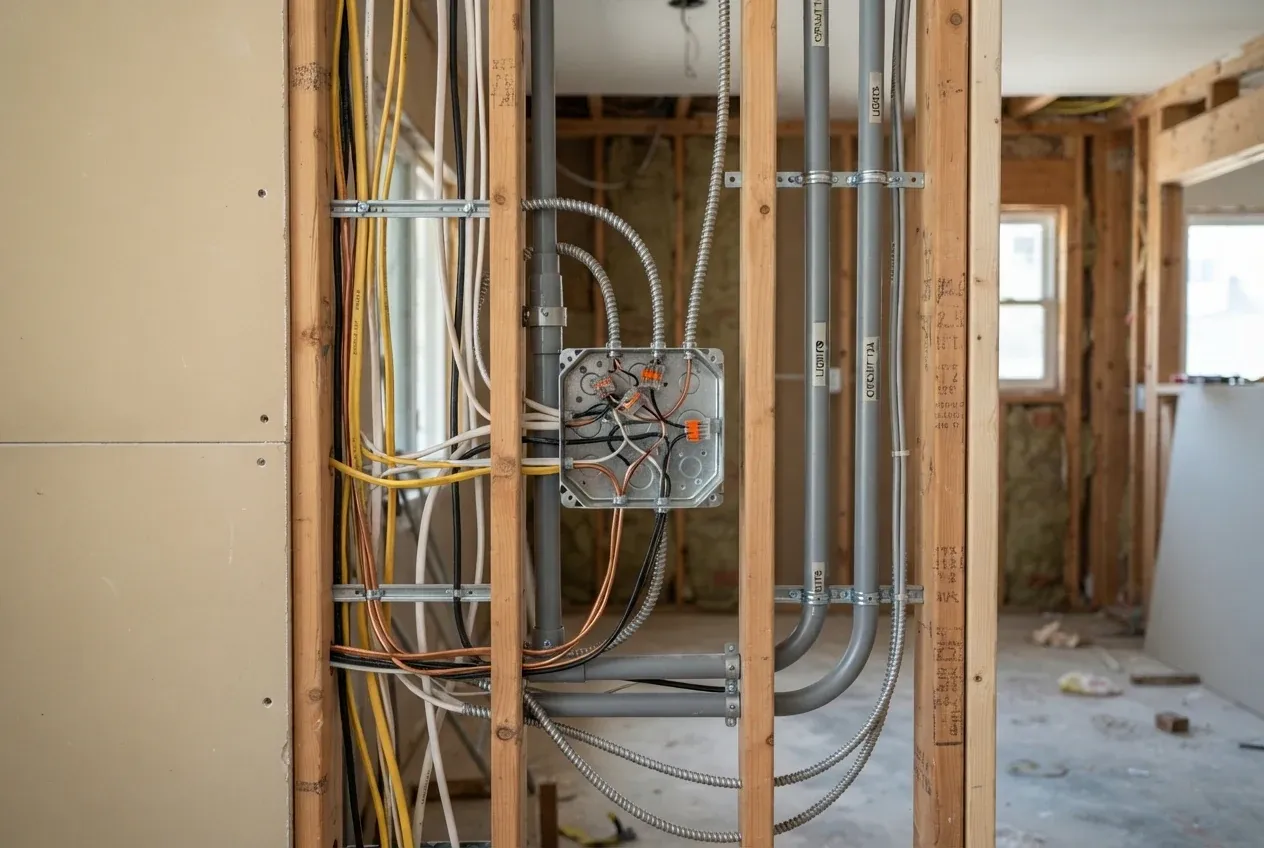
A house needs rewiring when the wire itself is the problem: knob-and-tube, cloth insulation that crumbles, aluminum branch circuits with failing joints, or circuits with no ground. New outlets on old wire don’t fix any of that. Call Hire Local Electrician with the age of the house and what you’ve noticed, and we’ll start with a licensed electrician mapping what’s in the walls, before anyone talks about a full home rewiring.
Replacing outlets, switches and fixtures only touches the visible parts. Rewiring replaces the cable behind the drywall, the part that’s expensive to reach and decides whether the circuits are safe.
What’s in your walls, and what usually happens to it?
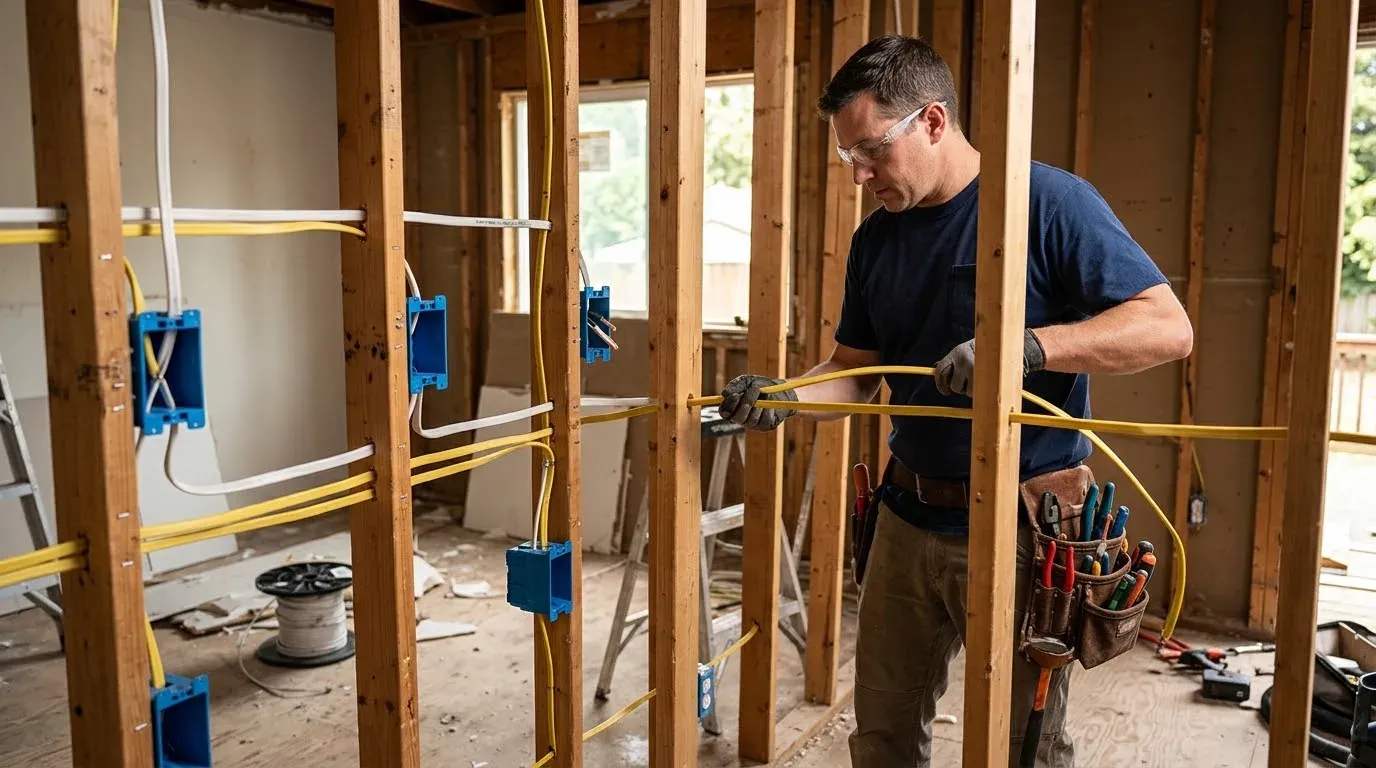
The kind of wire you find decides the fix. House age is a fair first guess, and how old your wiring is goes decade by decade, but houses get changed, so what’s physically there is what counts.
| Wiring you find | Roughly when | What usually happens |
|---|---|---|
| Knob-and-tube | Before about 1950 | Replaced. Insurers and buyers both push for it |
| Cloth-covered cable, no ground | 1950s to early 1960s | Replaced once the insulation is brittle. GFCI protection can bridge the gap for now |
| Aluminum branch circuits | About 1965 to 1973 | A short copper pigtail at every connection (COPALUM or AlumiConn), or the circuits replaced |
| Grounded copper cable | Mid-1970s on | Usually only devices or single circuits need work |
Aluminum is the one that surprises people. The U.S. Consumer Product Safety Commission accepts those pigtail repairs as permanent alongside full copper replacement, so a full tear-out isn’t automatic. Which way to go depends on the condition of the joints and what your insurer wants.
Partial or whole-house rewire?
Most rewires are partial. Kitchens and additions often got new wire decades ago, leaving the old stuff in bedrooms, hallways or one floor. A whole-house rewire makes sense when the old wiring runs everywhere, when the panel is being replaced anyway, or when the walls are coming open for a remodel. Rewiring often goes hand in hand with an electrical panel upgrade, because new circuits need room, and swapping two-prong outlets for grounded ones is part of the outlet installation at the end.
Not sure how much old wiring is left? An electrical inspection answers that before you commit to a scope.
When is the best time to rewire?
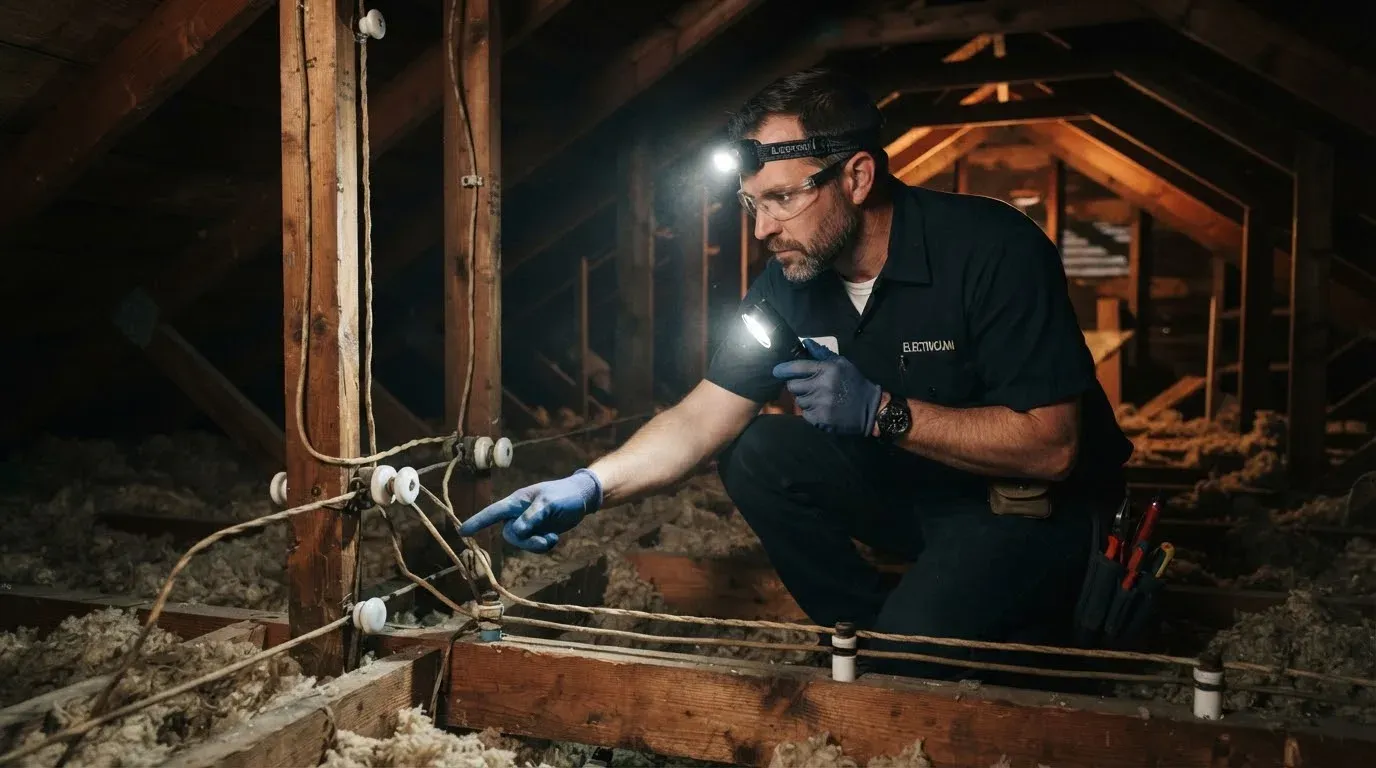
During a remodel. Access is the expensive part of a rewire, and a remodel has already opened the walls. People who rewire a year after redoing a kitchen usually end up paying for the same access twice, so if the walls are coming open, call before the drywall goes back.
Signs it's time to call
- Knob-and-tube wiring, typical of houses built before about 1950
- Two-prong outlets with no ground throughout the house
- Cloth-covered cable with insulation that's brittle or crumbling
- Aluminum branch wiring, most common in homes built from about 1965 to 1973
- Faults on several circuits, not just one
- Trouble getting or keeping insurance because of the wiring
- A big remodel that's opening walls anyway
Common problems
Which old wiring needs replacing?
Knob-and-tube wiring
An early method with no ground wire that relies on open air around the conductors to stay cool. It turns dangerous when it gets buried in insulation added later, which is very common. Many insurers won't cover a house with knob-and-tube still in use.
Crumbling cloth and rubber insulation
Old cable insulation goes brittle with age and heat. It cracks when it's moved, exposing bare conductors inside boxes and walls. There's no repairing the insulation itself.
Aluminum branch wiring
Used widely in branch circuits in the late 1960s and early 1970s. Aluminum expands, contracts and oxidizes more than copper, which loosens the connections at outlets and switches over time, and loose connections under load make heat.
Circuits with no ground
Two-wire circuits with no equipment ground. Surge protection can't work properly without a ground, and three-prong appliances lose their safety path.
Circuits stretched over decades
Houses pile up additions. Eventually a circuit has more outlets, longer runs and more splices than it was ever designed for.
How the work usually goes
- Step 01
Assess and scope
Your electrician works out which wiring types are in the house and where, which decides between a partial and a whole-house rewire.
- Step 02
Permit and layout
Rewiring is permitted, inspected work. The plan covers the circuit layout, where new circuits go and whether the panel has room.
- Step 03
Access plan
Choosing routes that keep damage to finished walls to a minimum. Access is a big part of the cost, so it's worth going over in detail.
- Step 04
Rough-in
New cable gets pulled and boxes set, and the rough-in is inspected before walls are closed.
- Step 05
Devices and connections
Outlets, switches and fixtures go in, and the new circuits are landed in the panel.
- Step 06
Final inspection
The local inspector checks the finished work before it's signed off.
Read this first
What makes old wiring risky to disturb?
If the house has knob-and-tube, don't add insulation over it. It depends on open air to stay cool, and burying it is a real fire risk.
Standard outlets and switches aren't rated for aluminum wire. Every aluminum connection needs a device or connector listed for it.
Brittle insulation cracks when it's moved. Pulling on old cable to have a look can create a hazard where there wasn't one.
What affects the cost
What drives the price of a rewire?
Every job is priced on what the electrician finds on site, and you only pay for work you agreed to.
- Square footage and number of circuits
- Whole-house or only certain circuits
- Wall type, since plaster and lath is much harder to work in than drywall
- Access through the attic, basement and crawl spaces for pulling cable
- Whether the panel needs upgrading too, which is common
- Drywall or plaster patching and painting afterwards
- Local permit and inspection fees
- Whether you're living in the house during the work
Straight answers
Home Rewiring questions
Does the whole house need rewiring, or just parts of it?
It depends on what's there. Many houses have been partly rewired already, a kitchen remodel here and an addition there, leaving old wiring only in certain rooms. Once that's mapped, rewiring just the affected circuits is often the right answer and costs a lot less.
Do we have to move out during a rewire?
Usually not. Work is normally staged so occupied rooms have power back each evening. A whole-house rewire is disruptive, with open walls, dust and rooms out of use in turn, but most families stay put. Tell us up front if you're living there and the work gets planned around it.
Is aluminum wiring safe?
It can be, once the connections are dealt with. The wire itself is rarely the trouble; the joints at outlets, switches and splices are, because aluminum loosens and oxidizes there over time. Warm plates, flickering and a burned smell at a device are warning signs worth a call.
Can I insure a house with knob-and-tube wiring?
Often it's harder. Many insurers decline or charge more for active knob-and-tube, and some want a letter from a licensed electrician on what's still live. Wiring that has been disconnected and abandoned in place is treated differently, so it pays to know which you have.
How long does a rewire take?
It depends on the size of the house, the wall type and the access. A few circuits can be done in a day or two. A whole house takes longer, and there's a rough-in inspection to fit in before walls close. You'll get a timeline along with the estimate.
Will rewiring wreck my walls?
Some openings can't be avoided. Cable gets routed through the attic, basement and crawl spaces wherever possible, and walls are opened only where needed. A house with no open routes means more cutting. Ask for the access plan, and whether patching is included, before work starts.

Before you dial
Old wiring in the walls?
Your ZIP code, what the power is doing, and whether anything smells hot, sparks or buzzes.
We'll get a licensed electrician out to you, and you only pay for work you agreed to.