Service
Electrical Inspection for Home Buyers, Sellers and Insurers
Tell us why you need the inspection. A licensed electrician checks the panel, grounding and circuits, then gives you written findings you can act on.
Start with a call
Tell us what's going on and where the job is. We'll get a licensed electrician out, and you'll know the price before the job begins.
What does an electrical inspection check?
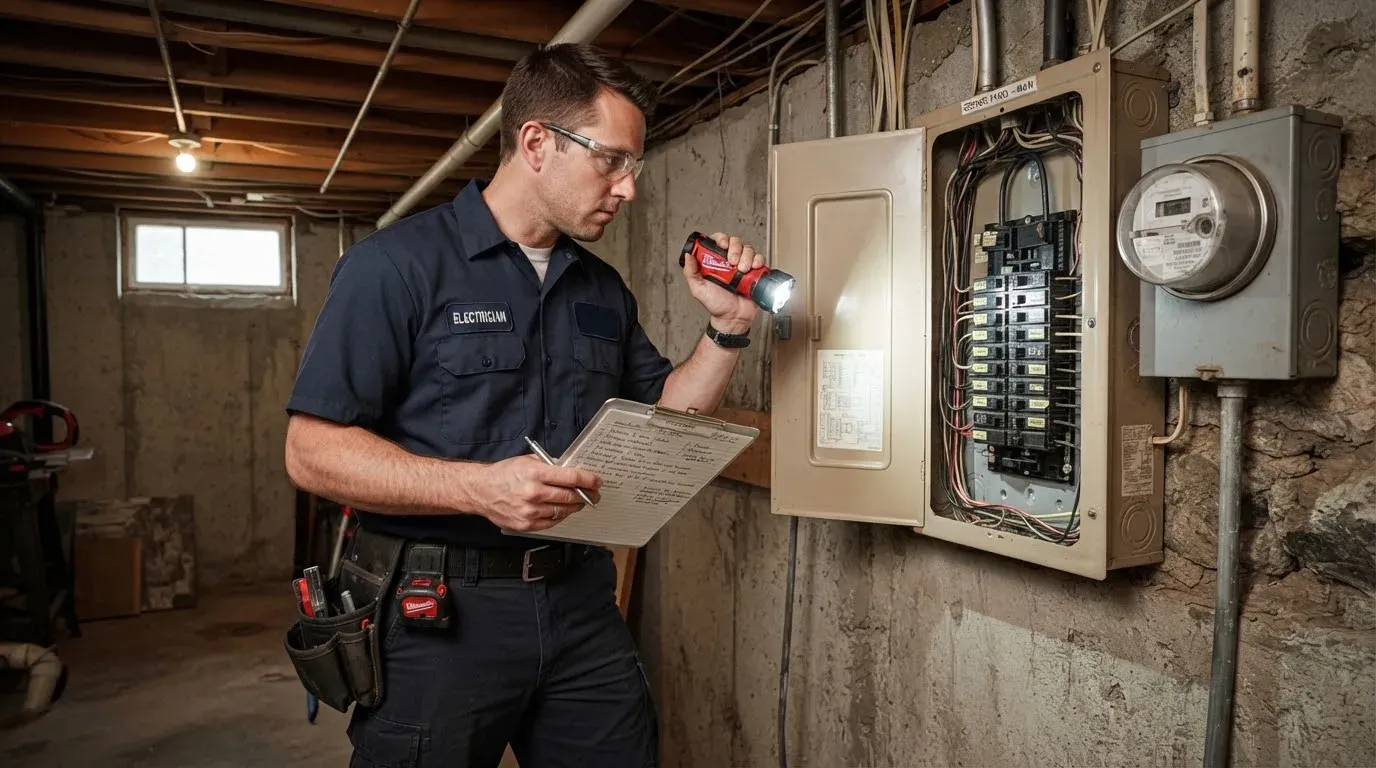
An electrical inspection checks the panel, the service, the grounding and a solid sample of the outlets and switches, and identifies the wiring types in the house. Tell Hire Local Electrician why you need it, whether that’s a purchase, a sale, an insurer’s letter or work you want checked, and we’ll set up the home electrical inspection that fits, done by a licensed electrician.
No inspection can see every inch of wire inside every wall. What a good one gives you is a solid picture of the system’s condition and age, and the specific problems that can be found, which in practice covers most of the ones that matter.
Which inspection do you need?
Three different inspections get confused, and each answers a different question.
| Inspection | Who does it | What it covers |
|---|---|---|
| General home inspection | A home inspector | The whole house, with a visual look at the panel and a sample of outlets |
| Electrical inspection | A licensed electrician | Panel, service, grounding, circuit testing, thermal imaging where offered, and written findings |
| Permit inspection | Your city or county inspector | New permitted work, checked against code before sign-off |
When a general home inspection flags something electrical, the electrical inspection is the follow-up that tells you what it means and what it takes to fix.
Is an older home “not up to code”?
Usually not in the sense people fear. Electrical codes apply when work is done, so a home wired to the rules in force when it was built was compliant then and doesn’t have to be brought up to today’s code. A good report separates two things: real safety concerns that need action, and places where the house differs from what’s required now. The second list is useful for planning upgrades. It isn’t a list of violations.

When is an inspection most worth having?
Before buying, especially an older house, where the cost is small next to the purchase and the findings can go into the negotiation. After work by a previous owner, permitted or not. When an insurer asks about the wiring or panel. And before a remodel, because knowing what you’re starting with changes the job.
If the findings point to old wiring, home rewiring explains the options and our guide to wiring by home age gives the background. If the panel is the problem, an electrical panel upgrade is the usual next step.
Signs it's time to call
- Buying a home, especially one built before the 1980s
- A general home inspection flagged electrical concerns
- An insurer asking about the wiring type or panel make
- Recent work you want checked by a second set of eyes
- A house with years of owner add-ons and changes
- Planning a remodel and needing to know what you're starting from
- Selling and wanting problems found before a buyer finds them
Common problems
What do electrical inspections often find?
Undocumented changes
Houses collect decades of work, much of it never permitted. Circuits get extended, splices get buried in walls, and outlets get added to circuits already at their limit. None of it shows from the outside.
Problem panels
Some panel makes, Federal Pacific and Zinsco above all, are known for breakers that may not trip on overload. Spotting them matters for safety and for insurance.
Missing GFCI and AFCI protection
The rules have grown with every code cycle. An older home isn't required to add it, but knowing where protection is missing lets you prioritize.
Grounding and bonding gaps
Common in older homes and easy to miss, because nothing looks wrong until a fault happens. Poor grounding also stops surge protection from working.
Grounded-looking outlets that aren't
A three-prong outlet wired to a circuit with no ground wire looks right and gives no ground at all. It's a frequent find and a real hazard.
Connections running hot
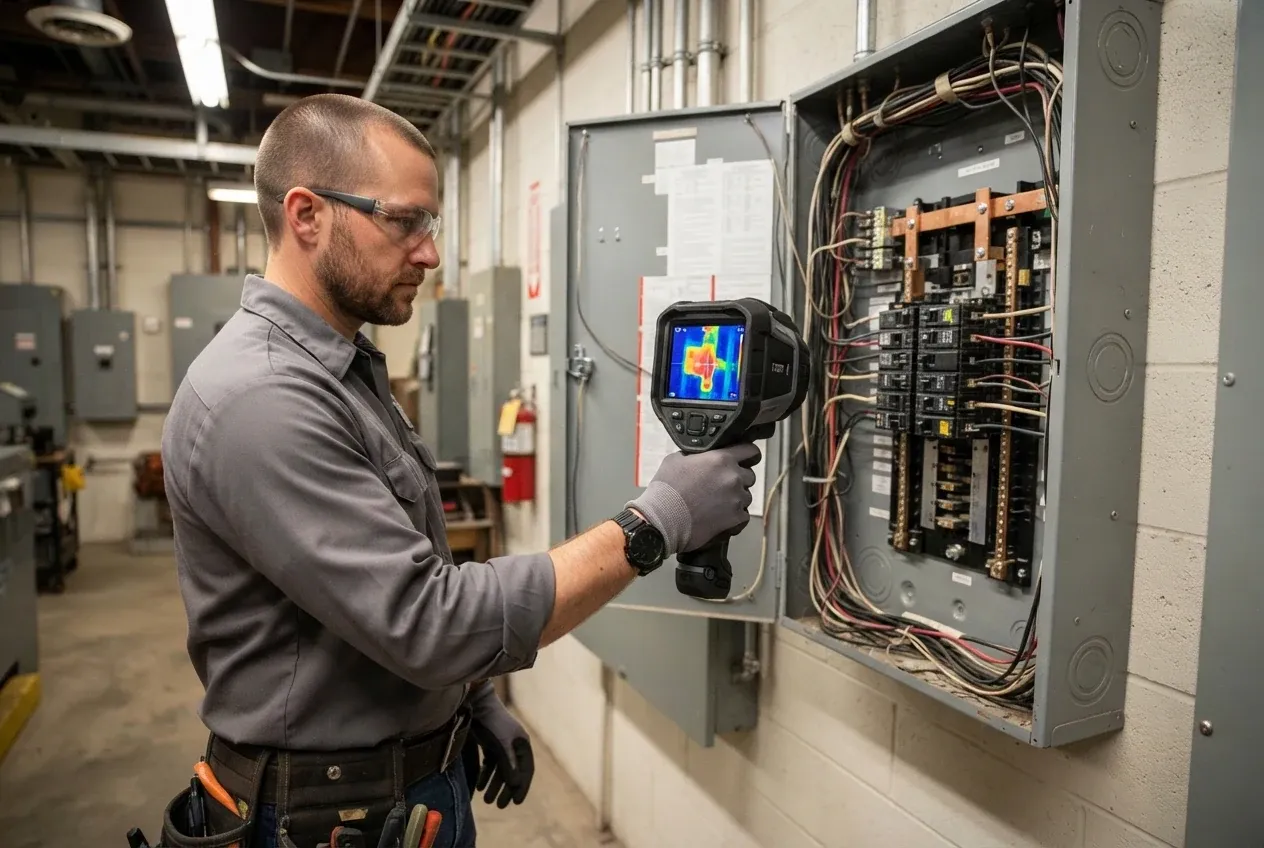
Loose connections heat up before they fail. Thermal imaging spots them while they're still developing.
How the work usually goes
- Step 01
Set the scope
A pre-purchase check, a targeted safety inspection and a check of recent work are different jobs. Agreeing which one you need shapes the visit.
- Step 02
Panel examination
Panel make and age, breaker condition, wire terminations, grounding and bonding, and any signs of heat or corrosion.
- Step 03
Service and grounding
Service entrance condition, capacity, the meter base and the grounding electrode system.
- Step 04
Circuit testing
Outlets and switches tested for polarity, ground and GFCI function, and the wiring types in the house identified.
- Step 05
Thermal scan where offered
Thermal imaging under load shows connections running hot before they fail visibly.
- Step 06
Written findings
A report listing what was found, what's a safety concern and what's simply different from today's code. That difference matters.
Read this first
What should you know before the inspection?
An inspection is an assessment, not a repair. The findings show what needs attention; fixing it is separate work.
A general home inspection isn't an electrical inspection. Home inspectors cover the whole house and are limited in how far they go on wiring.
Don't open the panel cover yourself before the visit. The inspection covers it safely.
What affects the cost
How is an electrical inspection priced?
Every job is priced on what the electrician finds on site, and you only pay for work you agreed to.
- The size of the house and the number of circuits
- How deep the inspection goes, since a visual check takes less time than one with thermal imaging
- Whether a written report is needed for a lender or insurer
- Access to the panel, attic, basement and crawl spaces
- The age of the house, since older homes take longer to assess
Straight answers
Electrical Inspection questions
How long does an electrical inspection take?
Often a few hours for a typical house, though it varies. Square footage, the number of circuits, a subpanel or detached garage, crawl-space access and whether thermal imaging is included all add time. You'll have an idea of the timing when the visit is booked.
What does an insurer want from an electrical inspection?
Usually the panel make and age, the wiring type (knob-and-tube, aluminum or copper) and whether the house is grounded. Some want a signed letter or their own form from a licensed electrician. Tell us what the insurer asked for when you call, and the inspection covers those points directly.
Should I get an electrical inspection before selling?
It's often worth it. Finding problems before the buyer's inspector does gives you the choice of fixing them, pricing them in or disclosing them, instead of renegotiating under deadline pressure. It pays off most in older homes and in houses where past owners did their own wiring.
Can an inspection be done after my remodel is finished?
Yes. A check of finished work confirms the new circuits are protected, connected and labeled properly, and that nothing was tied into an old circuit that can't carry it. It's especially useful if parts of the job weren't permitted or you're unsure who did the wiring.
Before you dial
Buying, selling or insuring a house?
Your ZIP code, what the power is doing, and whether anything smells hot, sparks or buzzes.
We'll get a licensed electrician out to you, and you only pay for work you agreed to.