Service
Electrical Panel Upgrade and Replacement for Your Home
Adding a charger, heat pump or new kitchen? A licensed electrician runs a load calculation first, so the new panel fits your house instead of a guess.
Start with a call
Tell us what's going on and where the job is. We'll get a licensed electrician out, and you'll know the price before the job begins.
What does an electrical panel do?
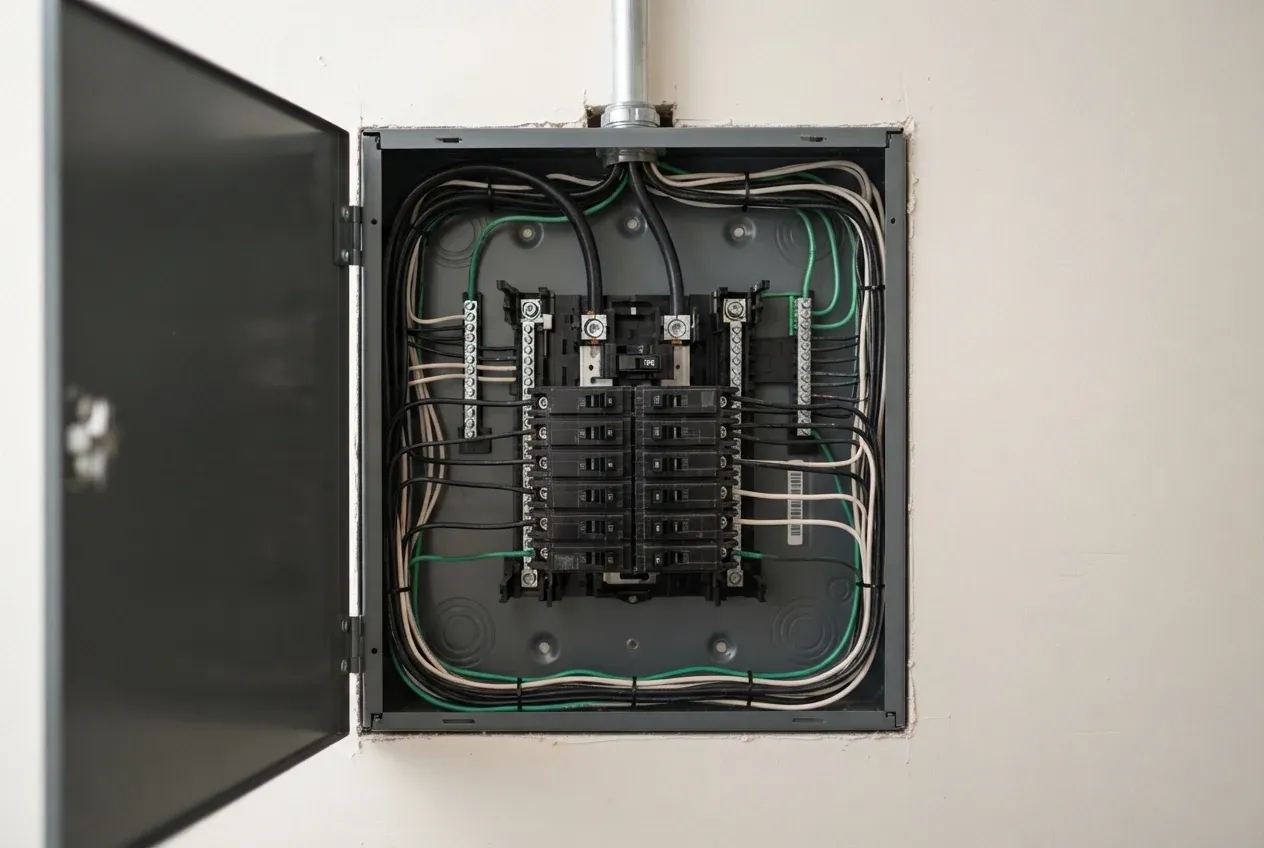
Your electrical panel takes the power coming in from the utility and splits it into the circuits that run the house, with a breaker guarding the wire on each one. It also ties the whole system to ground. Call Hire Local Electrician about an electrical panel upgrade and the first thing we’ll ask is what changed: a new EV, a heat pump, an electric range, or a panel that has started tripping, buzzing or running warm.
The panel sets a hard ceiling. On 100 amp service, nothing done downstream lets the house draw more than 100 amps. And old breakers that are slow to trip leave every circuit behind them under-protected.
Panel upgrade or replacement: which do you need?
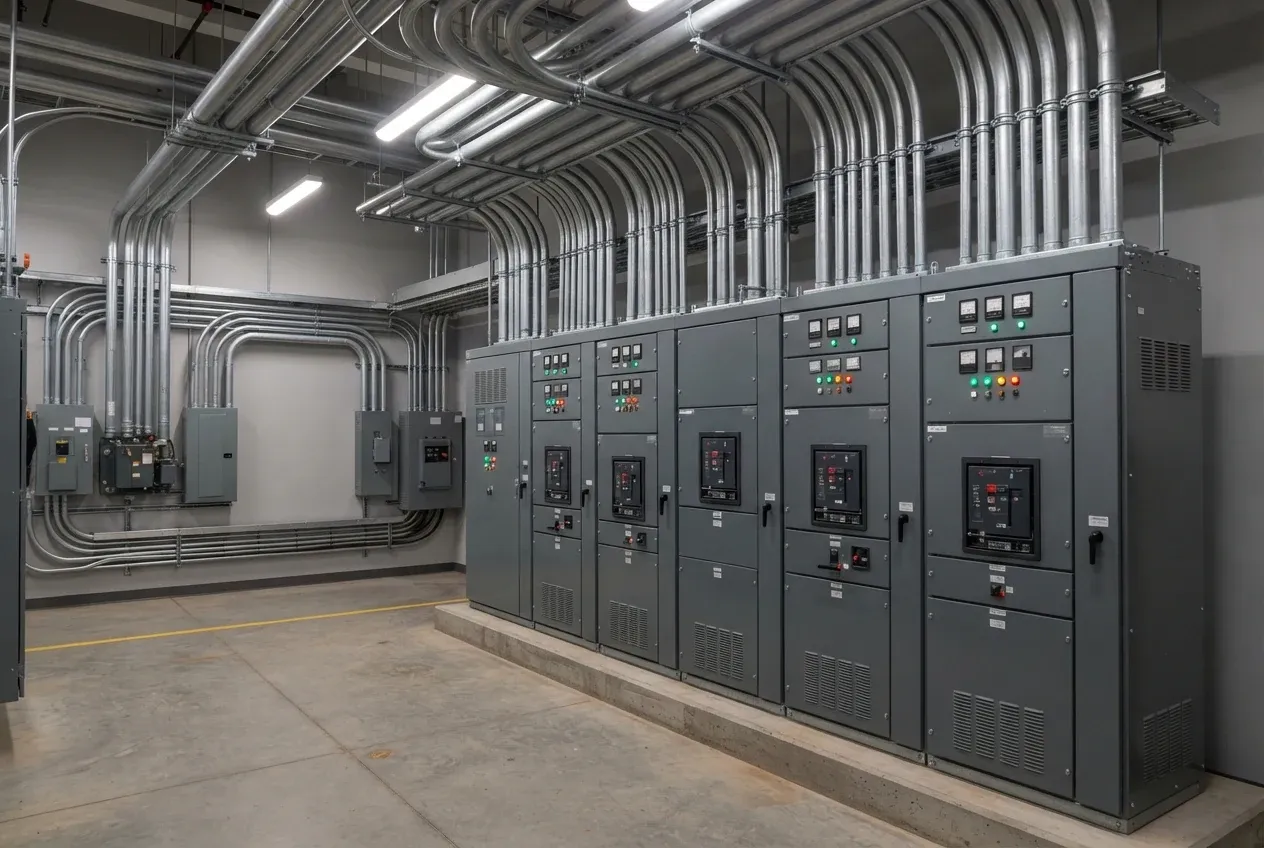
A replacement swaps a worn-out or problem panel for a new one at the same size. An upgrade raises the service size, which usually means new service entrance conductors, a new meter base and a disconnect and reconnect by your utility.
A fuse box, a corroded bus or a Federal Pacific or Zinsco panel needs replacing whatever its size. A house adding big loads, an EV charger installation most of all, usually needs the upgrade, though not always: see whether an EV charger can run on a 100 amp panel. Plenty of jobs are both.
How many amps does a house need?
Most houses land at 100, 150 or 200 amps, and a load calculation decides which. The calculation (NEC Article 220) adds up square footage, heating and cooling, cooking, water heating, the dryer and anything you plan to add. Treat the table as a rough guide; the calculation and your local code have the final say.
| Service size | Usually enough for | Time to size up when you add |
|---|---|---|
| 100 amps | The code minimum for a single-family home. Gas heat, gas cooking, central air | An EV charger, heat pump, electric range or electric dryer |
| 150 amps | Central air plus a few electric appliances | Going all-electric, or a Level 2 charger on top |
| 200 amps | The usual size for new homes: heat pump, electric range, dryer and one Level 2 charger in most houses | A second EV, a pool or hot tub, a detached shop |
| 400 amps | Large all-electric homes with two or more EVs, electric heat, a pool or a workshop | Usually set up as two 200 amp panels off one meter |
Bigger isn’t automatically better. Oversizing adds cost at the meter base, the service conductors and sometimes the utility connection, for capacity the house will never use.

What turns up when the old panel comes out?
Swapping a panel exposes the end of every circuit in the house, and older homes show their age right there. Houses wired from roughly 1965 to 1973 may have aluminum branch circuits with connections that need fixing. Grounding and bonding often falls short of today’s rules. Double-tapped breakers show the panel ran out of room long ago.
None of that is a reason to put the job off. It’s a reason to have the scope looked at properly before the price is set. If you’re not sure what’s behind your walls, how old your wiring is tells you what to expect by decade, and home rewiring covers what happens when a circuit is past saving. A new panel is also the easiest moment to add whole-home surge protection, since the electrician is already working in the box.
What will we ask when you call?
We’ll ask what you’re adding, the panel’s make and amp rating (printed on the label inside the door and on the main breaker), whether the service wires come in overhead or underground, and whether the house still has fuses. If you can snap a photo of that label, your electrician shows up knowing what’s there.
Signs it's time to call
- The home still has a fuse box instead of circuit breakers
- Service is rated at 60 or 100 amps and the household has added big loads since
- Breakers trip regularly under normal use, not just the odd overload
- There's no room left for new circuits, or tandem breakers fill every slot
- The panel is a make with a known track record, such as Federal Pacific Stab-Lok or Zinsco
- Rust, corrosion, water stains or heat discoloration inside the enclosure
- You're adding a large load such as an EV charger, heat pump or electric range
Common problems
Why do electrical panels need replacing?
Not enough amps for today's house
A 60 or 100 amp service was plenty when a house ran a fridge, a few lights and a TV. Induction cooking, heat pumps and car charging change the math. When total demand gets near the service rating, the main breaker trips, and no amount of work downstream fixes it.
Panels with a known track record
Federal Pacific Stab-Lok and Zinsco panels are the two most often flagged, because their breakers have a reputation for not tripping on overload. The weak point is how the breaker seats on the bus, so replacement is the usual answer, not repair.
No open slots
A full panel forces bad compromises: tandem breakers where the panel isn't listed for them, or several loads crowded onto one circuit. Both lead to tripping or overheated wire.
Corroded or heat-damaged bus bars
Water getting in and long-term loose connections leave corrosion and heat marks on the bus. That raises resistance, which makes more heat, which makes more corrosion. It doesn't get better on its own.
Double-tapped breakers
Two wires landed under a breaker terminal built for one is a common find in houses that have been added onto. It's a loose-connection risk, and usually a sign the panel ran out of room years ago.
How the work usually goes
- Step 01
Load calculation
Your electrician adds up actual and planned demand instead of guessing. That number decides whether 100, 150, 200 amps or more is right.
- Step 02
Panel and service check
The panel, service entrance, meter base, grounding and bonding all get looked at. Sometimes only the panel needs replacing; sometimes the service conductors and meter base do too.
- Step 03
Permit
Panel and service work needs a permit in nearly every jurisdiction, and an inspection afterwards. Your electrician handles the filing.
- Step 04
Utility disconnect
Swapping a panel means cutting the service. Your electrician books the disconnect and reconnect with the utility, whose schedule usually sets the day.
- Step 05
Swap and circuit transfer
The new panel goes in, every circuit moves across and gets labeled properly, and grounding and bonding are brought up to current code.
- Step 06
Inspection and sign-off
The local inspector checks the work before it's considered finished. Keep that paperwork. Buyers and insurers ask for it.
Read this first
Why is panel work never a DIY job?
The service lugs stay live even with the main breaker off, until the utility disconnects. Panel work is never a DIY job.
Don't take the panel's front cover off to look for a problem yourself.
If you see rust, water or scorch marks inside the panel, stop running big appliances on those circuits until it's checked.
What affects the cost
What drives the cost of a panel upgrade?
Every job is priced on what the electrician finds on site, and you only pay for work you agreed to.
- The service size you're moving to, since 200 amps costs more than 150
- Whether the meter base and service entrance conductors need replacing too
- Whether the service comes in overhead or underground
- Where the panel sits and how easy it is to work on
- Local permit and inspection fees, which vary a lot between jurisdictions
- Grounding and bonding that need bringing up to current code, common in older homes
- Aluminum branch wiring found during the transfer that needs its connections fixed
Straight answers
Electrical Panel Upgrade questions
Does a panel upgrade need a permit?
Yes, almost everywhere in the U.S. Panel and service work sits where utility power meets your house wiring, so it's permitted and inspected. Your electrician pulls the permit and books the inspection. Keep the sign-off paperwork, because buyers, lenders and insurers ask for it.
How long will the power be off during a panel swap?
Plan on most of a working day. The utility has to disconnect and reconnect the service, and their schedule often sets the window. If the meter base and service conductors are being replaced as well, it can run longer. You'll know the expected window before the day.
Is a Federal Pacific or Zinsco panel dangerous?
Both are widely flagged by home inspectors and electricians because their breakers have a reputation for failing to trip on overload. The issue is in the design, not wear, so new breakers don't solve it. Replacement is the usual recommendation, and some insurers ask about these panels by name.
Will a panel upgrade stop my lights flickering?
Only if the panel is the cause. Flicker can also come from a loose neutral, one worn breaker, a bad connection at a single fixture or the utility side. The cause gets found first, because replacing a panel for a fault that lives somewhere else fixes nothing.
Do I need a surge protector with a new panel?
Probably. The 2020 National Electrical Code added a requirement for a surge protective device whenever a home's service is installed or replaced. Whether it applies to you depends on the code edition your area has adopted. Where it isn't required, the panel swap is still the easiest time to add one.

Before you dial
Adding a big load to the house?
Your ZIP code, what the power is doing, and whether anything smells hot, sparks or buzzes.
We'll get a licensed electrician out to you, and you only pay for work you agreed to.