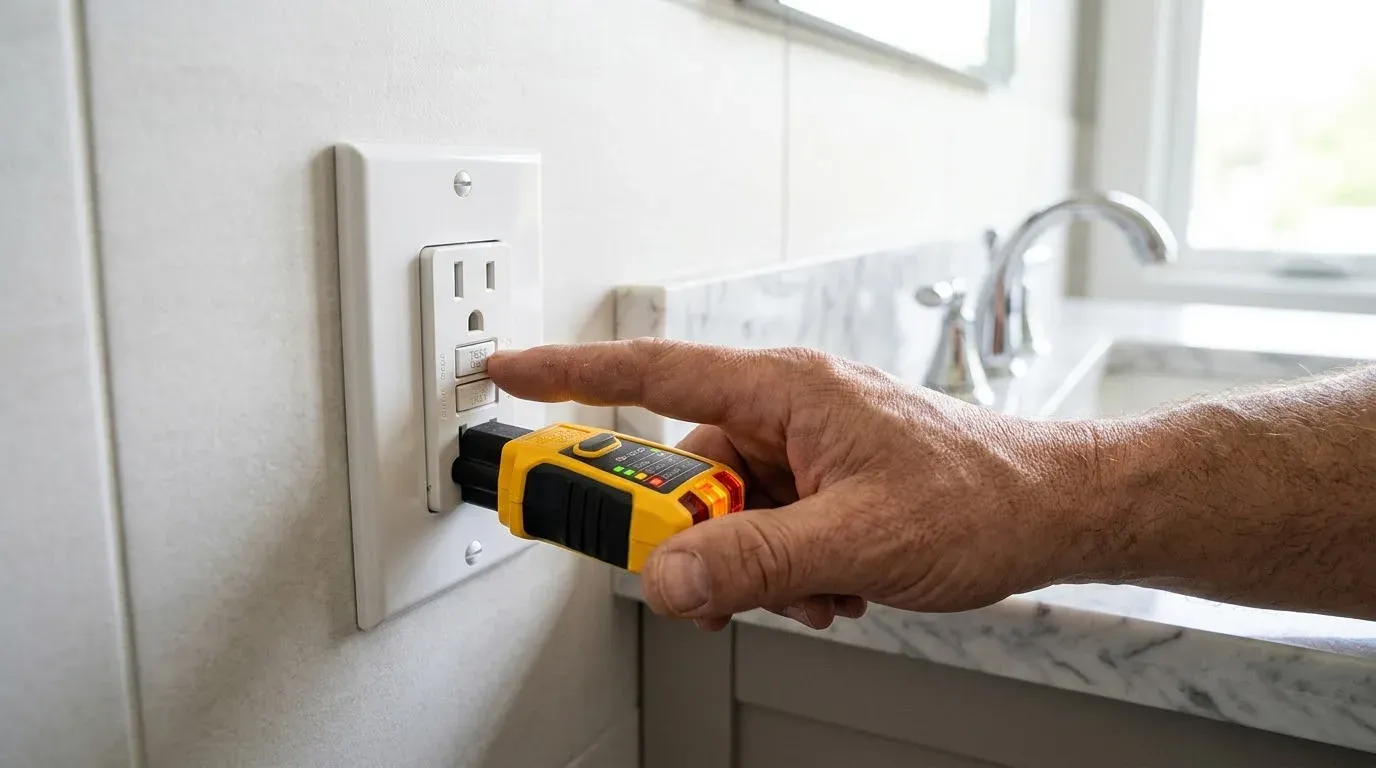
A GFCI outlet that won’t reset is telling you one of three things: no power is reaching it, it still senses current leaking somewhere on the circuit, or the device has failed and locked itself out. Only the last one is a bad outlet. The other two mean the problem is somewhere else, and pressing the button harder won’t change that.
GFCI outlets sit where water and electricity meet: bathrooms, kitchens, garages, basements, laundry areas and outdoors. When one stops resetting, Hire Local Electrician treats it as a troubleshooting job, because the outlet itself is often the last thing at fault. If the button still won’t hold after the checks below, call us and we’ll get a licensed electrician out to trace the fault.
What is the GFCI actually watching for?
A ground fault circuit interrupter compares the current going out on the hot wire with the current coming back on the neutral. If a few thousandths of an amp go missing, the device assumes that current is leaking to ground, possibly through a person, and cuts power faster than you can blink. Household GFCIs are built to trip somewhere around 4 to 6 milliamps.
That sensitivity is the whole point. It also means the GFCI will refuse to reset as long as the leak is still there. A stuck reset button is often the device working, not failing.
Is power getting to the outlet at all?
Most GFCIs made since 2006 need power on their incoming terminals before the reset button will latch. No power, no reset. So the first question is whether anything upstream has shut it off.
- A tripped breaker. A breaker that has tripped sits in the middle position, not fully on or off. A GFCI breaker in the panel also has its own test button.
- Another GFCI upstream. One GFCI often protects every outlet wired after it. In plenty of older homes, the bathroom outlets are fed through a GFCI in a different bathroom, the garage, the basement or an outdoor receptacle. If that one tripped, every outlet after it is dead, including the one you’re pressing.
- A switch. Some outdoor and garage GFCIs sit on a circuit that runs through a wall switch.
If you find a tripped GFCI somewhere else and it resets, the outlet you started with should come back on. If nothing upstream is tripped and the outlet is still dead, the break is in the wiring or the device, and that’s a job for the electrician.
What if it resets and trips straight away?
That pattern means the GFCI is sensing a real leak right now. Usual sources:
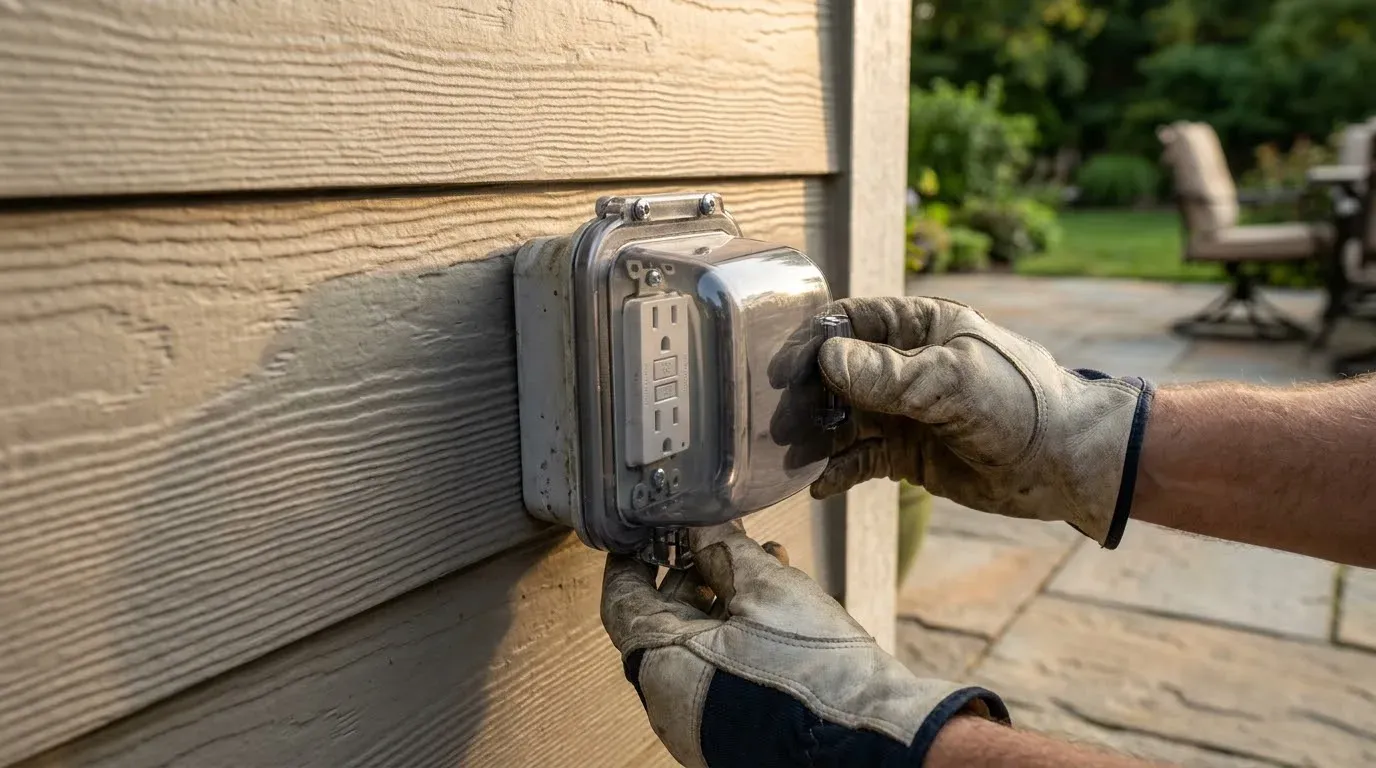
- water inside an outdoor box or cover after rain, sprinklers or a pressure wash
- a hair dryer, curling iron or appliance with a damaged cord or a wet motor
- an old refrigerator or freezer in the garage, which can leak enough current to trip a GFCI
- a downstream outlet or light fixture with moisture in the box
- cable damaged by a nail, a screw or rodents
Unplug everything from that outlet and the ones it protects, then try the reset once. If it holds with nothing plugged in, something you unplugged is the likely cause, so leave it unplugged until it’s checked. If it trips again with nothing connected, the leak is in the wiring or a box, and repeated resets won’t find it.
Can a GFCI outlet just wear out?
Yes. GFCIs have electronics inside, and heat, power surges and age wear them down. Since UL tightened its GFCI standard in 2006, new devices have to either stop supplying power or signal clearly when they can no longer protect you. Many do it by locking out: the reset button simply won’t latch.
On a lot of models a status light tells you which state you’re in. A solid or flashing red light usually means the device has tripped or failed its self-test, though the meaning varies by brand, so the printed label on the outlet is the guide.
An older GFCI can fail the other way: it resets, power comes on, and it no longer trips when it should. That’s why the U.S. Consumer Product Safety Commission recommends pressing the test button on every GFCI once a month. If pressing test doesn’t cut the power, the device isn’t protecting anyone.
Could it be wired wrong?
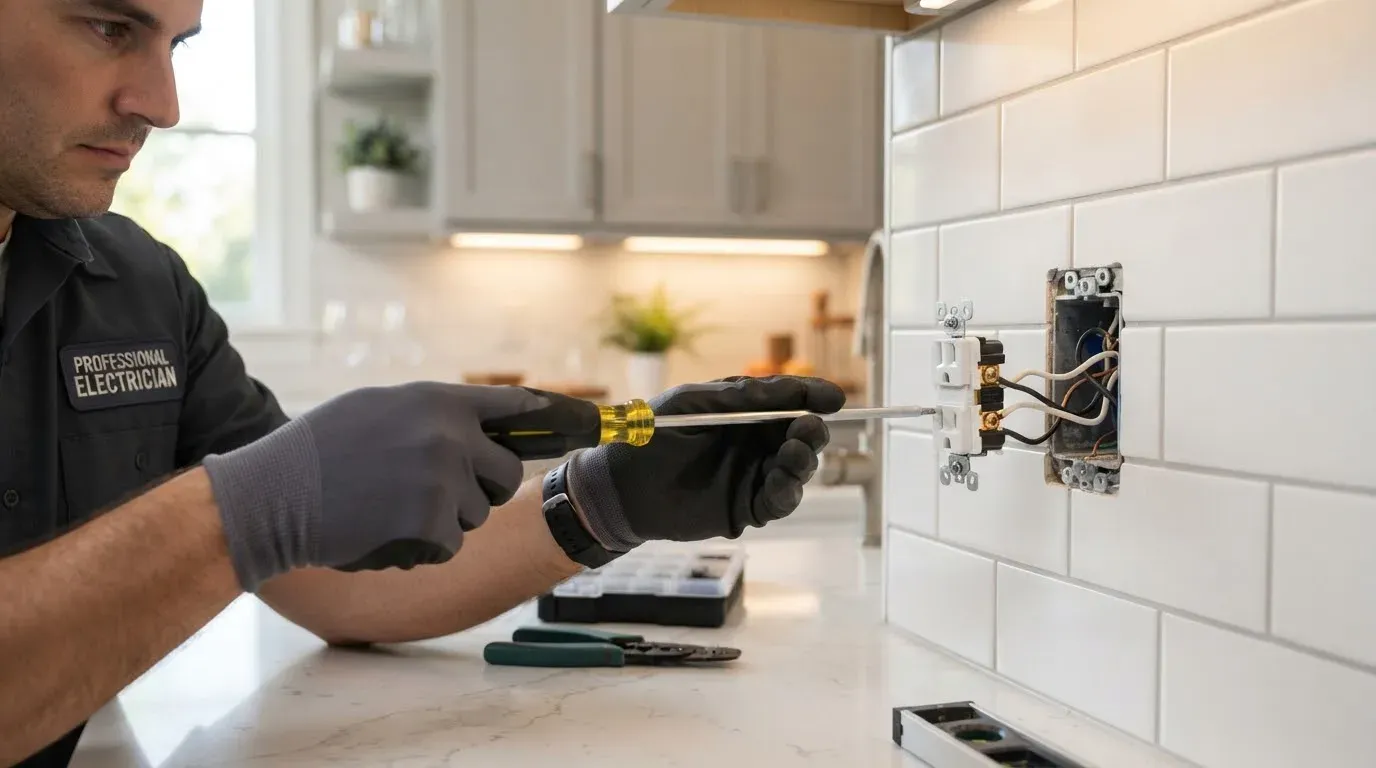
A newly replaced GFCI that won’t reset was very often connected backwards. Every GFCI has a pair of terminals marked LINE for the incoming power and a pair marked LOAD for the outlets downstream. Swap them, and a modern GFCI is designed to refuse to reset. It’s a safety feature, not a defect.
Wiring problems that come with the house cause trouble too. If a downstream circuit shares its neutral with a different circuit, the GFCI sees current returning on a path it doesn’t monitor and trips the moment anything turns on. That one takes a tester and some patience to find.
What do the symptoms usually point to?
| What you’re seeing | What it usually means |
|---|---|
| The reset button won’t push in or click | No power reaching the device, or a failed GFCI that has locked out |
| It resets, then trips again with nothing plugged in | Moisture or damage in the wiring or a box on that circuit |
| It holds until one appliance is plugged in | Current leaking in that appliance or its cord |
| It trips every time it rains | Water getting past an outdoor cover, gasket or box |
| It was just replaced and won’t reset | LINE and LOAD wires reversed |
| Several outlets died at once and none of them reset | A tripped GFCI or breaker upstream, or a loose connection feeding them |
When is a GFCI that won’t reset urgent?
Most stuck GFCIs are an inconvenience. These signs make it a call tonight:
- the outlet or faceplate is warm, or there are brown or black marks around it
- a burning smell, buzzing or crackling from the outlet or the box
- water near the panel, or a box that’s still wet inside
- anyone felt a tingle or shock from an appliance, a faucet or the outlet
If any of those apply, switch off the breaker for that circuit if you can reach the panel without standing in water, keep everyone away from the outlet, and call. The guide on outlets that spark, get hot or smell covers those signs in more depth, and our emergency electrician service is the page for a fault that can’t wait.
What does the electrician check on the visit?
The electrician starts by confirming whether power reaches the GFCI’s LINE terminals, then maps which outlets that GFCI protects. That map alone solves a lot of calls. From there the work follows what the tests show:
- measuring for leakage on each part of the circuit to find which run, box or device is bleeding current
- opening outdoor boxes and covers to check for water, corrosion and failed gaskets
- checking for shared neutrals between circuits
- replacing a failed GFCI with the right type for the spot, such as a weather-resistant device outdoors
- labeling the outlets that are protected downstream, so the next trip takes seconds to sort out
If the wiring is sound and the device has simply worn out, it’s a short visit. Replacement and new GFCI protection fall under our outlet installation and replacement work. A leak that moves around or only shows up some days is a job for electrical troubleshooting.
A GFCI breaker in the panel that won’t reset follows the same logic, with the same causes on the circuit side. The guide on why breakers keep tripping explains the other ways a circuit can trip.
Still won’t hold after those checks?
If you’ve found no tripped breaker and no tripped GFCI upstream, and the outlet still won’t hold, stop pressing the button and leave that circuit alone. Call us and tell us which room it’s in, what was plugged in when it went, and whether it started after rain or after someone worked on it. We’ll get a licensed electrician out, and you’ll know the price before any part gets replaced.