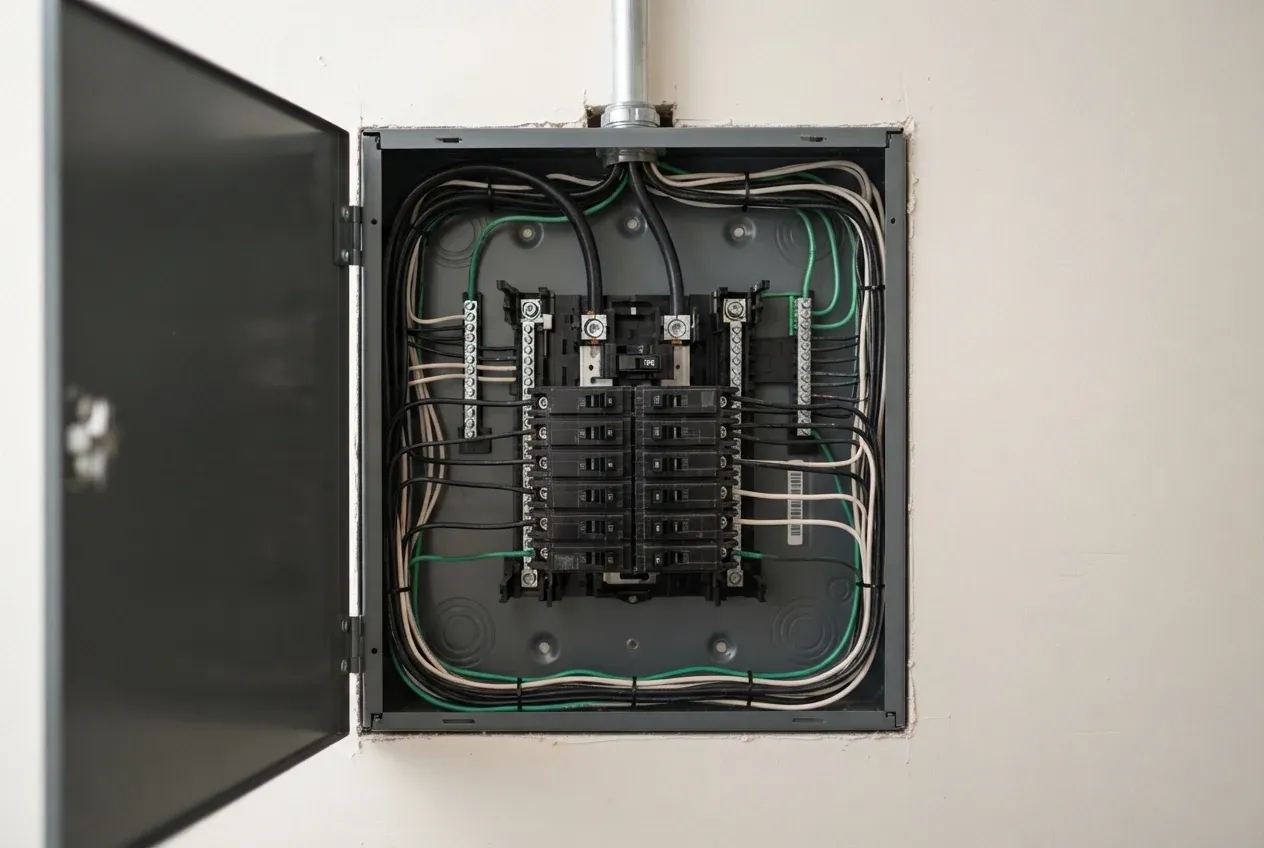
A breaker that keeps tripping is doing its job: it has sensed too much current, a short, current leaking to ground, or arcing, and it’s cutting power before the wire in the wall overheats. The real question is what it’s reacting to. A breaker that trips after a delay usually means overload; one that trips instantly usually means a fault.
If a breaker won’t stay on, call Hire Local Electrician and we’ll get a licensed electrician out to find what it’s protecting you from. The most common home “fix”, swapping in a bigger breaker, removes the protection instead of solving anything.
What is a breaker actually protecting?
The wire in the wall. Not the appliance, and not the panel.
Every circuit is wired with a certain size of conductor, and each size can carry only so much current safely. The breaker is sized to the wire so it opens before the wire overheats. Put a 30-amp breaker on a circuit wired for 15 amps and the wire can run far past its rating before the breaker ever reacts. “It kept tripping, so I put a bigger one in” is how a nuisance becomes a fire risk.
What makes a breaker trip?
Too much on the circuit (overload)
More load than the circuit is built for. The classic case is a kitchen circuit running a microwave and a toaster oven at once, or a space heater sharing a bedroom circuit with everything else. An overload trip comes after a short delay, because the breaker’s thermal element takes a moment to heat.
What fixes it: spreading the load across circuits, or a dedicated circuit for the appliance that draws the most.
A short circuit
A hot wire touching a neutral or a ground. Current spikes and the breaker trips instantly, every time.
What fixes it: finding the fault, which may be in a device, a box, a cord or the cable itself. A short doesn’t clear on its own, and resetting into it again and again is hard on the breaker and the wiring.
A ground fault
Current leaking to ground, often through moisture or damaged insulation. GFCI breakers and outlets sense very small leaks and trip. Our guide on GFCI outlets that won’t reset covers where that leakage usually comes from.
What fixes it: finding the moisture or the damage. Outdoor covers, light fixture gaskets and damaged buried cable are the usual sources.
An arc fault
AFCI breakers recognize the electrical pattern of arcing, a fire risk ordinary breakers don’t respond to at all. Frequent AFCI trips often point to damaged cable, a nail through a wire or a loose connection. Some appliances can cause nuisance trips, but that’s a conclusion to reach after checking, not before.
What fixes it: testing the circuit to find the arcing point.
A worn-out breaker
Breakers are mechanical, and every trip wears them a little. An old breaker can get touchy and trip under a normal load, or, much worse, stop tripping when it should.
What fixes it: testing the breaker and replacing it with one listed for that panel.

What should I notice before I call?
A few observations make the visit much shorter:
- Does it trip instantly, or after a while? Instant suggests a short or a ground fault. A delay suggests overload.
- Does it trip only when one appliance runs? That points at the appliance or at what else shares its circuit.
- Does it trip with everything unplugged? Then the fault is in the wiring, not anything plugged in.
- Did it start after something changed? A new appliance, a picture hung on the wall, recent work, a storm or a leak.
That last one is often the quickest clue to the cause.
What if a breaker never trips at all?
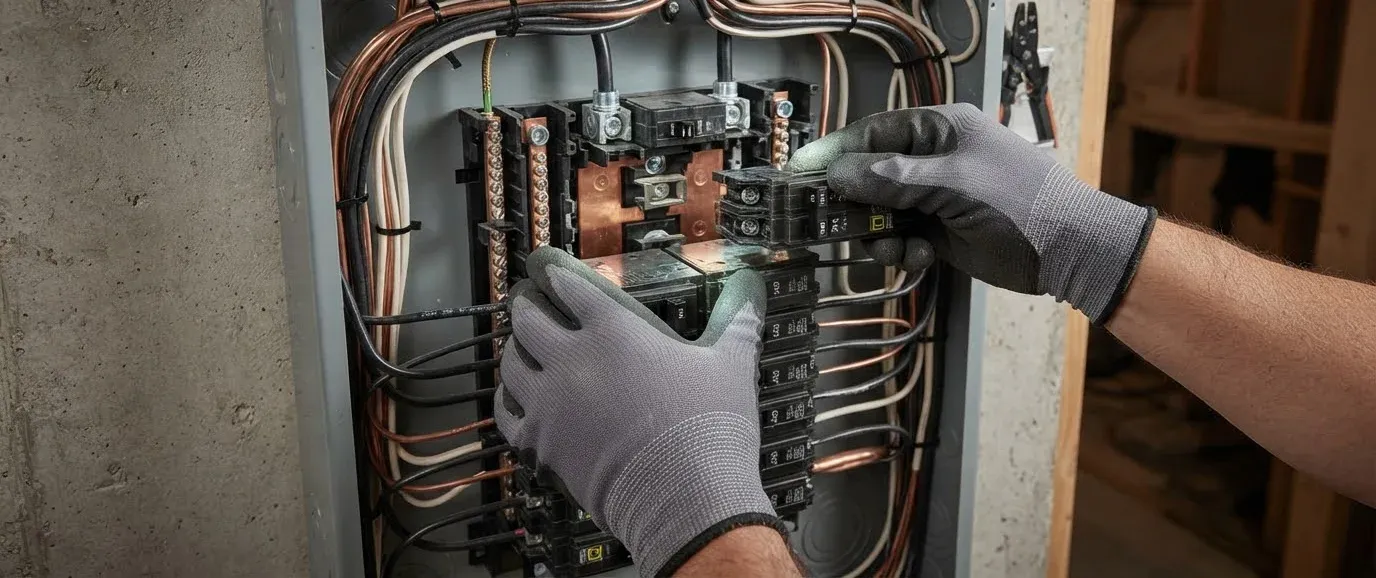
Breakers that trip too often get all the attention. The opposite problem matters more. A breaker that no longer trips under overload leaves the circuit unprotected, and nothing tells you. That’s the core of the long-running concern about certain older panel brands, whose breakers have a history of failing to trip when they should.
If your panel is one of those, or nobody knows how old the breakers are, have it tested even if nothing seems wrong. Replacement is covered on our electrical panel upgrade page.
When should I stop resetting it?
After one try. If the breaker trips again right away, leave it off. It has found a fault it won’t tolerate, and forcing it back on removes the only protection that circuit has.
If it’s warm, buzzing or smells like burning, that’s an emergency: leave it off and call now. If it simply won’t hold, call us and tell us which circuit, what’s on it and what it was doing when it tripped. We’ll get a licensed electrician out for circuit breaker repair, or for electrical troubleshooting when the fault is hiding somewhere along the circuit.