A short dip in the lights at the moment your air conditioner starts is usually normal. The compressor motor pulls several times its running current for a fraction of a second, and every light on the same service sees the voltage sag. It’s a problem when the dip is deep, lasts longer than a blink, gets worse over time, or comes with lights getting brighter somewhere else.
Hire Local Electrician treats that second group as electrical troubleshooting, because the cause is usually a connection that’s losing its grip. Call us, describe what the lights do and when, and we’ll get a licensed electrician out to measure what’s happening at the panel while the AC starts.
Why does the AC make the lights dim?
A motor that’s standing still has almost no resistance to current, so for the first moment of a start it draws a surge, often several times what it uses once it’s spinning. Central AC compressors are among the biggest motors in a house. That surge pulls the voltage down a little across everything between the utility transformer and your light bulb: the service drop, the meter, the main lugs, the panel and the branch wiring.
Every one of those points adds a bit of resistance. When they’re all tight and properly sized, the dip is brief and barely visible. When one of them is loose, corroded or undersized, the same surge pulls the voltage down further, and you see it.
Other big motors do the same thing on a smaller scale: a well pump, a sump pump, a refrigerator or freezer compressor, a shop vacuum. LED bulbs on dimmers often show a dip that an old incandescent bulb would have hidden, so a newly visible flicker after switching bulbs isn’t always a new electrical problem.
How much dimming is normal?
| Usually normal | Worth a visit |
|---|---|
| One quick blink when the compressor starts | Dimming that lasts a second or longer |
| The same as it’s always been | Getting more noticeable this season |
| The whole house dips evenly | Some lights dim while others get brighter |
| Only when a big motor starts | Flickering with nothing starting, or when the wind blows |
| The AC starts smoothly | The AC hums, clicks, struggles to start or trips its breaker |
| Lights only | A warm panel, buzzing, or a burning smell |
If only one room or one fixture flickers, the problem is usually local to that circuit or fixture, and it’s a smaller job.
Can a loose connection cause the flicker?
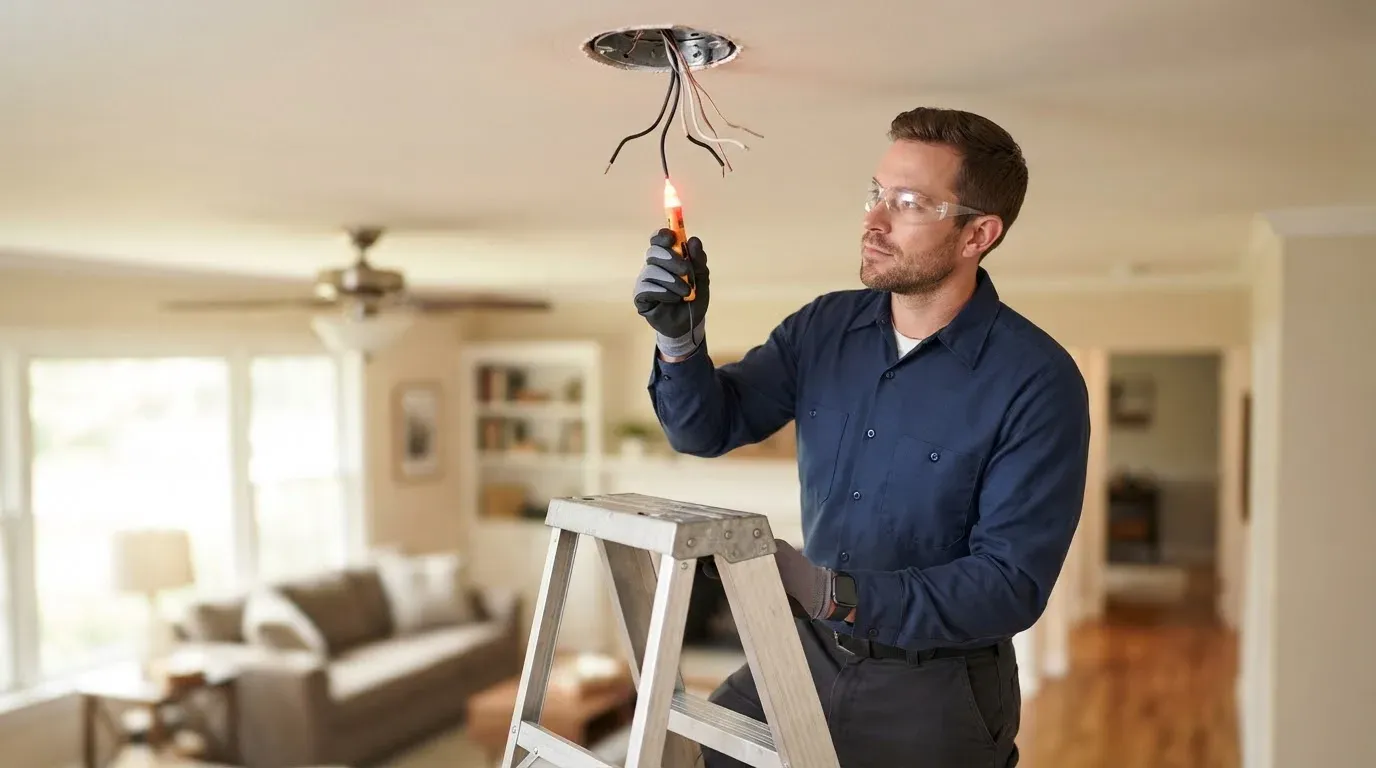
Yes, and it’s the most common reason a normal dip turns into a noticeable one. A loose connection adds resistance right where the AC’s surge has to pass, so the voltage drops further at the start and the joint heats up a little every time. Over a summer of starts and stops, that heat loosens it more.
Where the loose connection sits changes how serious it is:
- At the AC’s own breaker or disconnect: the AC circuit gets the worst of it, and the breaker may trip or run warm.
- At the main lugs, the meter base or the service drop: the whole house dips, and it can get worse in wind or rain.
- On the neutral: lights get brighter on one side of the house while they dim on the other. That’s the serious one, because a failing neutral can send high voltage to electronics. Our guide on half the house losing power explains why and what to do.
A warm panel cover, buzzing, or a smell of hot plastic near the panel makes it urgent. Turn the AC off at the thermostat, keep away from the panel, and call us.
Could the air conditioner itself be the problem?
Sometimes. A compressor that struggles to start draws its surge for longer, so the dip lasts longer too. You may hear it: a hum or a few clicks before it catches, or a start that takes noticeably longer than it used to.
The electrician checks the electrical side first, so you know where the problem is before anything gets replaced. That means comparing the breaker and wire size with the rating plate on the outdoor unit, checking the disconnect beside it, and measuring the voltage at the unit while it starts. If the circuit and connections test clean and the compressor is the one dragging, you’ll know that from the visit.
Is it something on the utility’s side?
It can be. If your neighbors see the same dip when your AC starts, or theirs, the transformer serving the street may be heavily loaded or the service drop may be long or undersized. A voltage reading taken at your panel during an AC start shows whether the sag is arriving from outside or happening inside your own equipment, and that reading is the evidence the utility needs if the fix is on its side.
What does the electrician check?
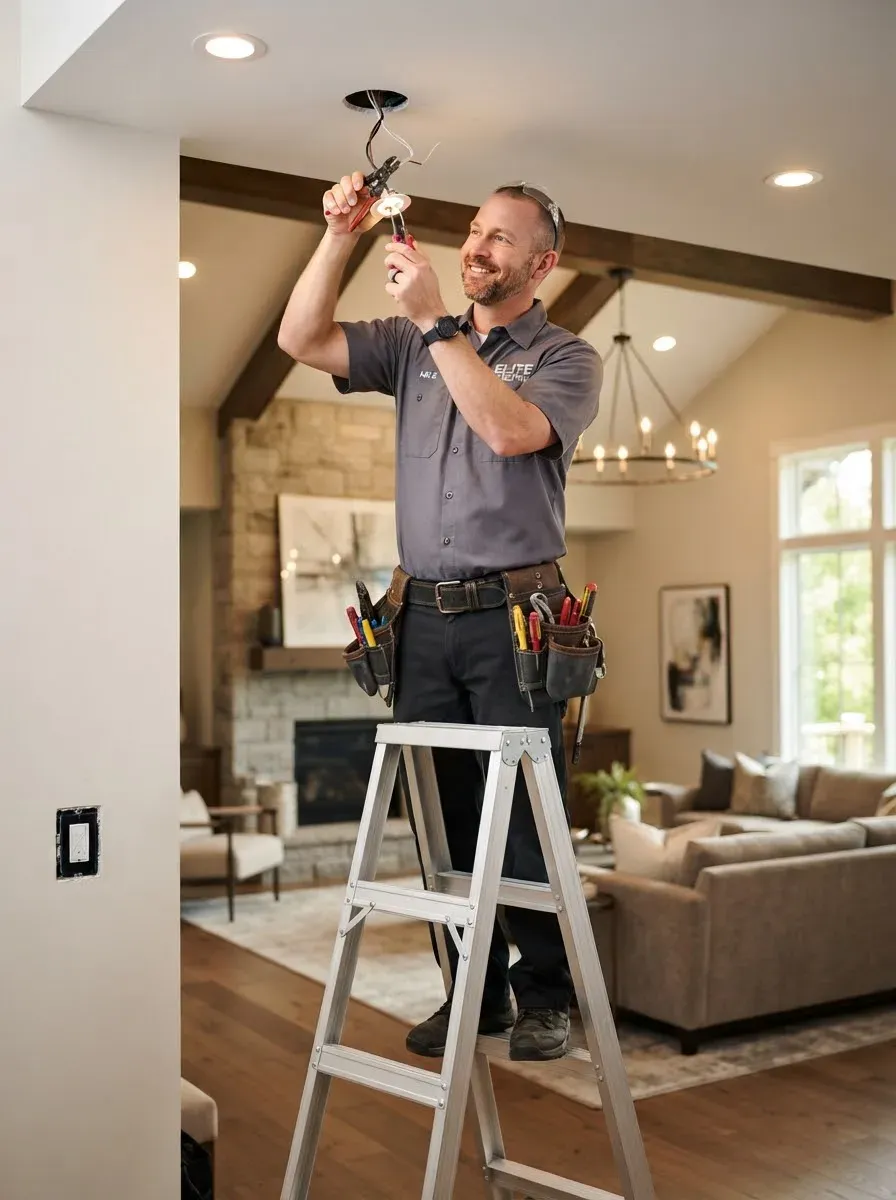
On a flicker call, the electrician works from the measurements, not guesses:
- voltage at the panel and at an affected outlet, read during an AC start
- the main lugs, neutral bar and AC breaker, checked for tightness and heat discoloration
- the AC’s disconnect and its wire connections
- the AC circuit’s breaker and wire size against the unit’s rating plate
- aluminum branch circuits or other connections prone to loosening, in older homes
Tightening or replacing a failing connection is often the whole repair. A worn breaker gets replaced as part of circuit breaker repair. When the cause won’t show itself on the first try, it’s a job for electrical troubleshooting, and if the panel is crowded or undersized for an AC that was added years later, a whole-house electrical inspection puts the whole picture on paper.
When should I call about the flicker?
If the lights blink once when the AC starts and they always have, there’s nothing to do. If the dip is getting longer, other lights get brighter at the same time, or the AC struggles to start, call us before the hottest weeks of the year put the most starts on that connection. Tell us what dims, for how long, and whether anything else changed recently, such as a new AC, new bulbs or a storm. We’ll get a licensed electrician out, and you’ll hear what the fix costs before it starts.