A small blue spark the instant a plug goes in or comes out is normal. An outlet that’s warm to the touch, throws a big or repeated spark, buzzes, or smells like hot plastic is not. Those signs mean heat is building at a loose or worn connection, and that outlet shouldn’t be used again until a licensed electrician has opened it up.
Hire Local Electrician treats most of these as electrical repairs and some as emergencies. Call us, tell us what you saw and smelled, and we’ll get a licensed electrician out to find where the heat is coming from before it gets into the wall.
Is a small spark when I plug something in normal?
Usually, yes. If the device is switched on when you plug it in, it starts drawing current the moment the prongs touch the contacts, and that makes a quick flash inside the slot. It’s more noticeable with a vacuum, a space heater or a hair dryer than with a phone charger.
What isn’t normal is any spark that’s large, yellow or white, that pops, leaves a mark, or happens with nothing switched on. Neither is a plug that sparks every time you wiggle it.
How do I tell normal from a problem?
| Normal | Stop using the outlet |
|---|---|
| A tiny blue flash when plugging in something that’s switched on | A big, bright or popping spark, or sparks with the device switched off |
| Faceplate and plug cool to the touch | Faceplate, plug or cord warm or hot |
| The plug grips firmly | The plug wobbles or falls out on its own |
| No smell | A smell of hot plastic, sometimes described as fishy |
| Clean, even-colored faceplate | Brown or black marks, or melted plastic around a slot |
| Silent | Buzzing, crackling or sizzling from the box |
The Electrical Safety Foundation International (ESFI) lists warm or discolored outlets, buzzing outlets and loose-fitting plugs as warning signs of an unsafe wiring condition. Its advice is the same for all of them: stop using the outlet until it’s checked.
Why does an outlet get hot?
Heat at an outlet almost always comes from resistance at a point where metal meets metal. The usual causes:
- A loose terminal screw or wire. Every time the circuit carries a load, the loose joint heats up. Over months it oxidizes, gets looser and runs hotter.
- Push-in (backstab) connections. Many outlets let the installer push the wire into a hole in the back instead of wrapping it around a screw. Those spring contacts can loosen with heat and time.
- Worn contacts in the outlet. When the slots no longer grip a plug firmly, the plug touches on a small area and that spot heats up.
- Heavy loads. A typical 1,500-watt space heater draws about 12.5 amps, most of what a 15-amp circuit is built for, and it runs for hours. A worn outlet that copes with a lamp can overheat under that.
- Aluminum branch wiring. Homes wired with aluminum branch circuits, mostly from the mid-1960s to the early 1970s, are prone to overheating at outlets and switches that weren’t made for aluminum. Our guide on what your home’s age says about its wiring covers that era.
- A damaged plug or cord. Sometimes the heat starts in the appliance’s plug, not the outlet. The electrician checks both.
Dimmer switches run slightly warm by design. A standard outlet or switch shouldn’t feel warm at all.
Why didn’t the breaker trip?
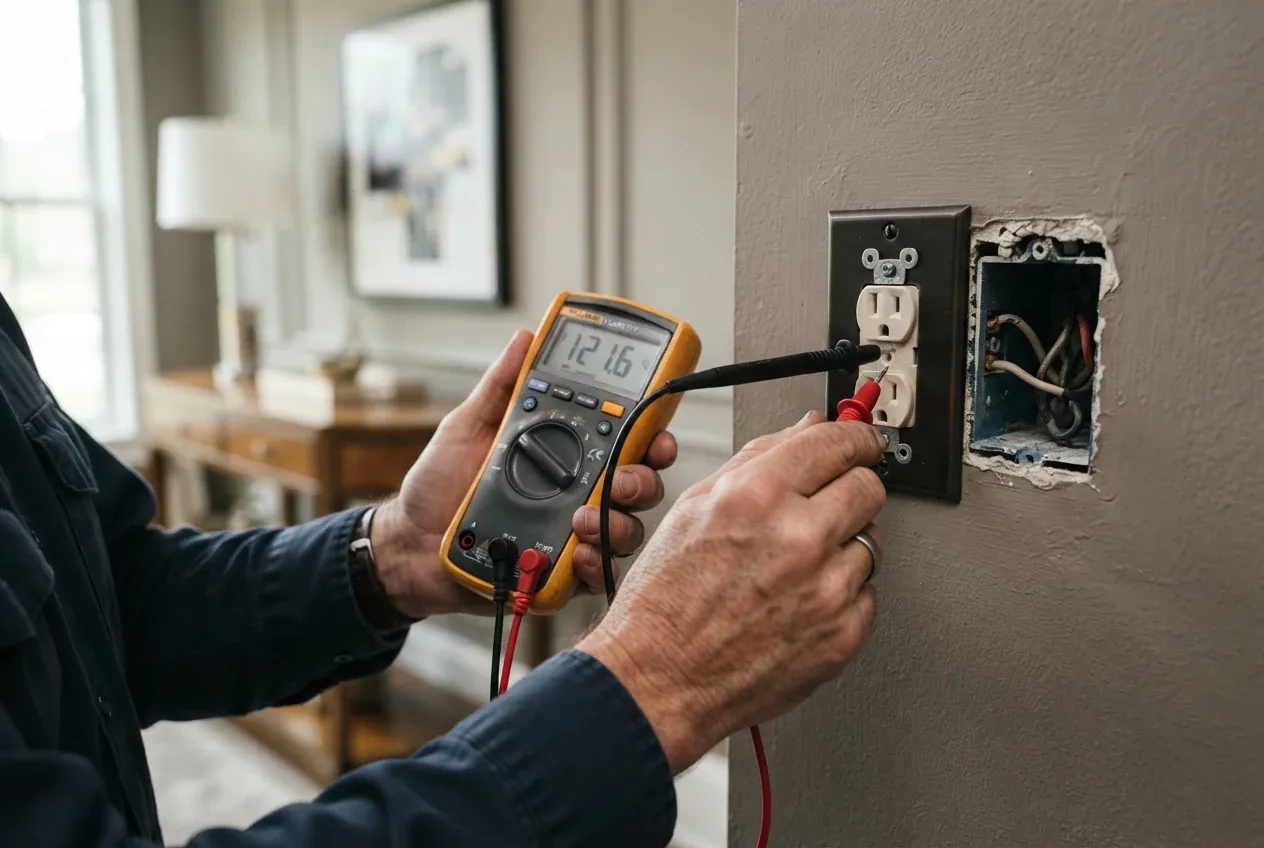
A standard breaker trips on too much current or a short. A loose connection doesn’t draw extra current. It just turns some of the normal current into heat at one spot, so the breaker sees nothing wrong while the outlet cooks. That’s why a scorched outlet can sit on a circuit whose breaker never moved.
Arc-fault (AFCI) breakers are designed to recognize the electrical pattern of arcing at a loose connection, which is one reason newer codes require them in most living areas. Many older homes don’t have them. The guide on why breakers trip explains how the different breaker types work.
What does a burning smell from an outlet mean?
It means something has already gotten hot enough to cook plastic: the outlet body, the wire insulation or the plug. The smell can fade once the load is unplugged, but the damage that caused it is still there, and it will heat up again the next time that circuit works hard. Treat a burning smell as a fault to fix, not a moment that passed.
Is a hot or sparking outlet an emergency?
Yes, when there’s heat, a burning smell, scorch marks, smoke or buzzing. A single small spark from an outlet that stays cool can wait for a regular visit. If you’re not sure which you have, our guide to telling an electrical emergency from a job that can wait goes through the in-between cases.
If it’s hot, marked, smoking or smells:
- If you see smoke or flame, get everyone out and call 911.
- Don’t touch or pull a plug that’s hot or melted.
- Switch off the breaker for that outlet if the panel is dry and you can reach it safely. If you can’t tell which breaker it is, keep everyone away from the outlet.
- Don’t use the other outlets on that circuit until it’s been checked.
- Call us and describe what you saw, smelled and heard.
What gets fixed on the visit?
With the circuit off, the electrician pulls the outlet and looks at the terminals and the wire ends. Heat leaves clear evidence: darkened insulation, discolored copper, a melted outlet body. Depending on what’s there, the repair usually means:
- cutting the wire back to clean, undamaged copper, where there’s enough length in the box
- replacing the outlet, with a tamper-resistant device where code calls for one
- moving connections off push-in holes and onto screw terminals or clamp-style terminals
- checking the other outlets on the same circuit, since a loose joint at one often means more down the line
- looking at what’s plugged in: a space heater or window AC on a shared circuit may need a dedicated circuit of its own
- on aluminum branch wiring, using connectors rated for the job instead of a standard outlet
A single burned outlet is ordinary electrical repair work. Replacing worn outlets around the house, or adding a dedicated circuit so the heater stops sharing, falls under outlet installation and replacement.
What should I do tonight?
If the outlet is cool and gave one small spark, keep using it and watch it. If it’s warm, marked, buzzing or smells like burning, leave the breaker off and call. Tell us which room it’s in, what was plugged in, and how long it’s been doing it. We’ll get a licensed electrician out to open it up, and you’ll know what the repair is and what it costs before anything is replaced.